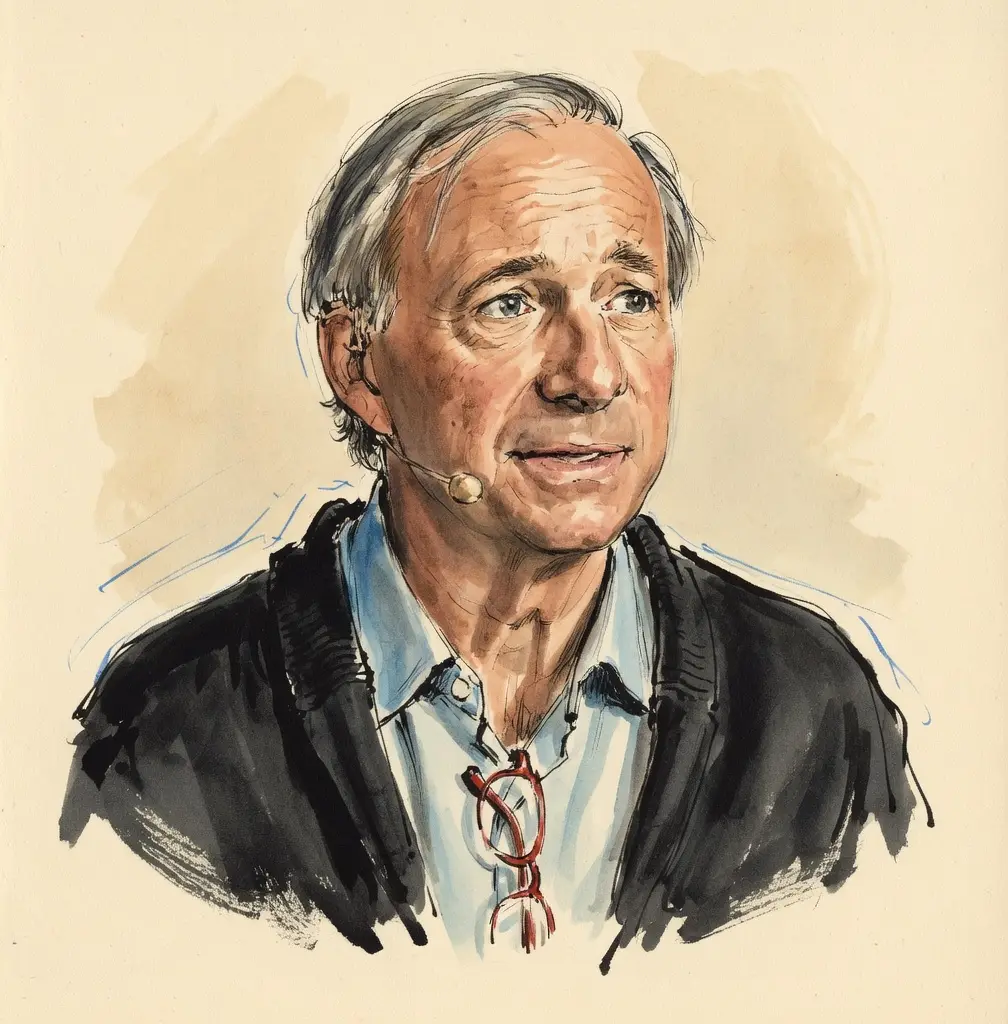
Ray Dalio on Leadership
TL;DR
Ray Dalio believes effective leadership requires an open, transparent, believability-weighted idea meritocracy, not traditional hierarchical authority.
Key Points
He advocates that a leader should look and act like a skilled ninja rather than a muscular action hero to be maximally effective.
Effective leaders must work to both open-mindedly seek the best answers and bring others along as part of that discovery process.
Dalio learned from his own painful near-failure in the early 1980s that high standards and expectations, learned through pain, are essential to prevent setbacks.
Summary
Ray Dalio fundamentally rejects the conventional view of leadership, stating that what most people consider good leadership—strong authority and being followed without question—is ineffective for achieving maximum success. He posits that the most effective leaders work to open-mindedly seek the best answers and bring others along in that discovery process, valuing thoughtful disagreement and excellent challengers over mere followers. This approach is operationalized through an 'Idea Meritocracy,' which Dalio defines by the equation: Radical Truth + Radical Transparency + Believability-Weighted Decision Making.
This leadership paradigm implies treating an organization as a machine designed to achieve a goal, where managers act as engineers who constantly probe, diagnose root causes of problems, and design improvements based on objective evidence. Dalio emphasizes that leaders must be appropriately uncertain yet well-equipped to deal with that uncertainty through exploration, valuing honesty about weaknesses over pretense. He also asserts that the 'WHO' (the right people in the right roles) is more important than the 'WHAT' (the specific tasks), stressing the need to hire right, train rigorously, and then hold people accountable to the system's principles.
Key Quotes
Our greatest power is that we know that we don't know and we are open to being wrong and learning.
I began seeking out the smartest people I could find who disagreed with me so that I could understand their reasoning. Only after I fully grasped their points of view could I decide to reject or accept them. By doing this again and again over the years, not only have I increased my chances of being right, but I have also learned a hugeחס.
Frequently Asked Questions
Ray Dalio's core leadership philosophy centers on creating an 'idea meritocracy' within an organization. He believes this system, built on radical truth, radical transparency, and believability-weighted decision making, is superior to traditional hierarchical leadership models. He emphasizes the importance of open-minded exploration and challenging ideas to find the best answers.
He believes that thoughtful discussion and disagreement are practical necessities, not threats, to effective leadership. Dalio prefers having good challengers over good followers, as questioning stress-tests leaders and reveals what they are missing. Leaders must prioritize finding out what is true over needing to be right.
Ray Dalio advises leaders to manage the organization like an engineer manages a machine, focusing on designing systems that produce good outcomes. This includes hiring the right people for the right roles, constantly training, testing, evaluating, and sorting people, and holding both oneself and others accountable to the established principles.
Sources9
Principles
10 Powerful Leadership Lessons From Principles by Ray Dalio
Principles: A Growth and Leadership Playbook From Ray Dalio’s Washington...
Leadership Lessons from Ray Dalio
Principles – Admired Leadership
Assessing Leadership in Business: A Critical Investigation of Ray Dalio
What Ray Dalio taught me about Authentic Leadership and Taxidermy
Ray Dalio’s Advice for Bosses and How He Gives Tough Feedback
Ray Dalio identifies the 11 characteristics of visionary leaders
* This is not an exhaustive list of sources.