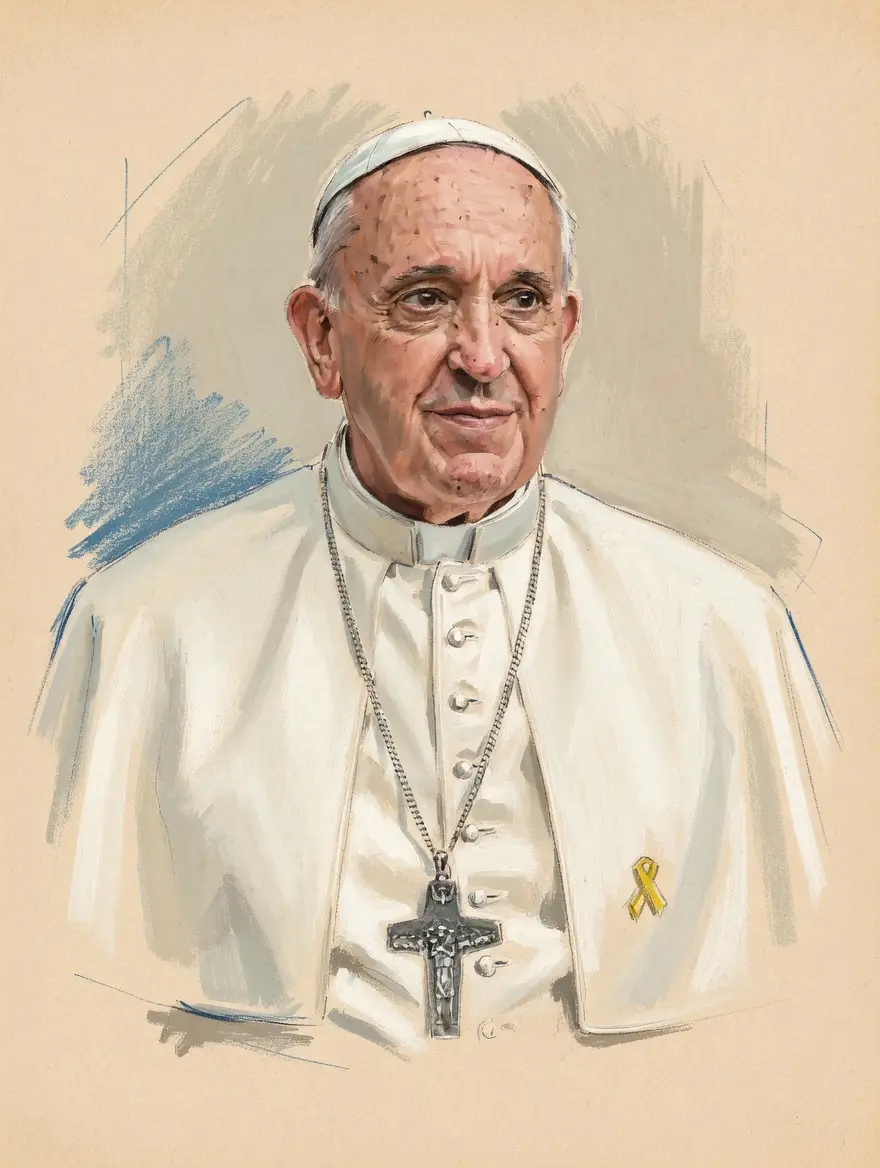
Pope Francis on Nuclear Weapons
TL;DR
Pope Francis firmly condemns both the use and possession of nuclear weapons as inherently immoral for modern security.
Key Points
He declared the use and possession of nuclear weapons "immoral" during a 2019 visit to Hiroshima and Nagasaki.
The Holy See, under his leadership, was among the first states to ratify the UN Treaty on the Prohibition of Nuclear Weapons (TPNW).
His position condemns reliance on nuclear deterrence, stating it cannot form the basis for peaceful coexistence or fraternity among nations.
Summary
Pope Francis has taken a distinctly firm stance on nuclear weapons, declaring that both their use and their very possession are "immoral." This position represents a notable break from the Church's immediate preceding stance, which reluctantly accepted the possession of nuclear weapons for deterrence as an interim measure while demanding disarmament. The Pope grounded this shift in disillusionment over the failed promise of achieving nuclear disarmament post-Cold War and the increased threat nuclear weapons pose in the current unstable, multipolar international security environment. He contends that international relations cannot be built upon mutual intimidation or the threat of mass destruction, as these create only a false sense of security, diverting resources from true global priorities like fighting poverty and promoting development.
His condemnation emphasizes that nuclear weapons are weapons of mass environmental destruction, linking disarmament to ecological concerns under the principle that "all is connected." This forceful rejection is rooted in a desire to move beyond the "peace of a sort" offered by deterrence toward a "genuine peace" inspired by an ethics of solidarity. The Pope's view aligns with the Holy See's support for the Treaty on the Prohibition of Nuclear Weapons (TPNW), which explicitly prohibits the possession of such arms. While his predecessors conditionally accepted deterrence as a step toward abolition, the Pope views the continued possession itself as morally unacceptable in the present day.
Key Quotes
If we also take into account the risk of an accidental detonation as a result of error of any kind, the threat of their use, as well as their very possession, is to be firmly condemned
Nuclear deterrence and the threat of mutually assured destruction cannot be the basis for an ethics of fraternity and peaceful coexistence
The use of atomic energy for purposes of war is immoral, just as the possessing of nuclear weapons is immoral
Frequently Asked Questions
Pope Francis strongly condemns both the use and the possession of nuclear weapons as immoral, marking a departure from the prior acceptance of possession for deterrence. He asserts that they do not provide a genuine sense of security but instead foster a climate of fear and divert necessary resources from human development.
Yes, Pope Francis's position evolved by explicitly condemning the possession of nuclear weapons, not just their use, which previously had been reluctantly permitted for deterrence. This represents a break with the conditional acceptance of deterrence maintained by his immediate predecessors following the Cold War.
He is a strong critic of nuclear deterrence, stating that the threat of mutually assured destruction cannot be the foundation for peaceful coexistence. He argues that international relations must be inspired by an ethics of solidarity rather than military force and mutual intimidation.
Sources9
Pope Francis: A world free of nuclear weapons is necessary
Pope Condemns Having Nuclear Weapons
ICAN tribute to Pope Francis
Francis and the Bomb: On the Immorality of Nuclear Deterrence
Pope Francis: "Possession of Nuclear Weapons is Immoral." Implications for military service? : r/Catholicism
“All is Connected”: Pope Francis, Nuclear Disarmament, and Climate Change
First Committee Statement on Nuclear Disarmament
Under Pope Leo XIV, What's Next for the Catholic Church's Nuclear Weapons Platform?
Forbidden: Receiving Pope Francis's Condemnation of Nuclear Weapons
* This is not an exhaustive list of sources.