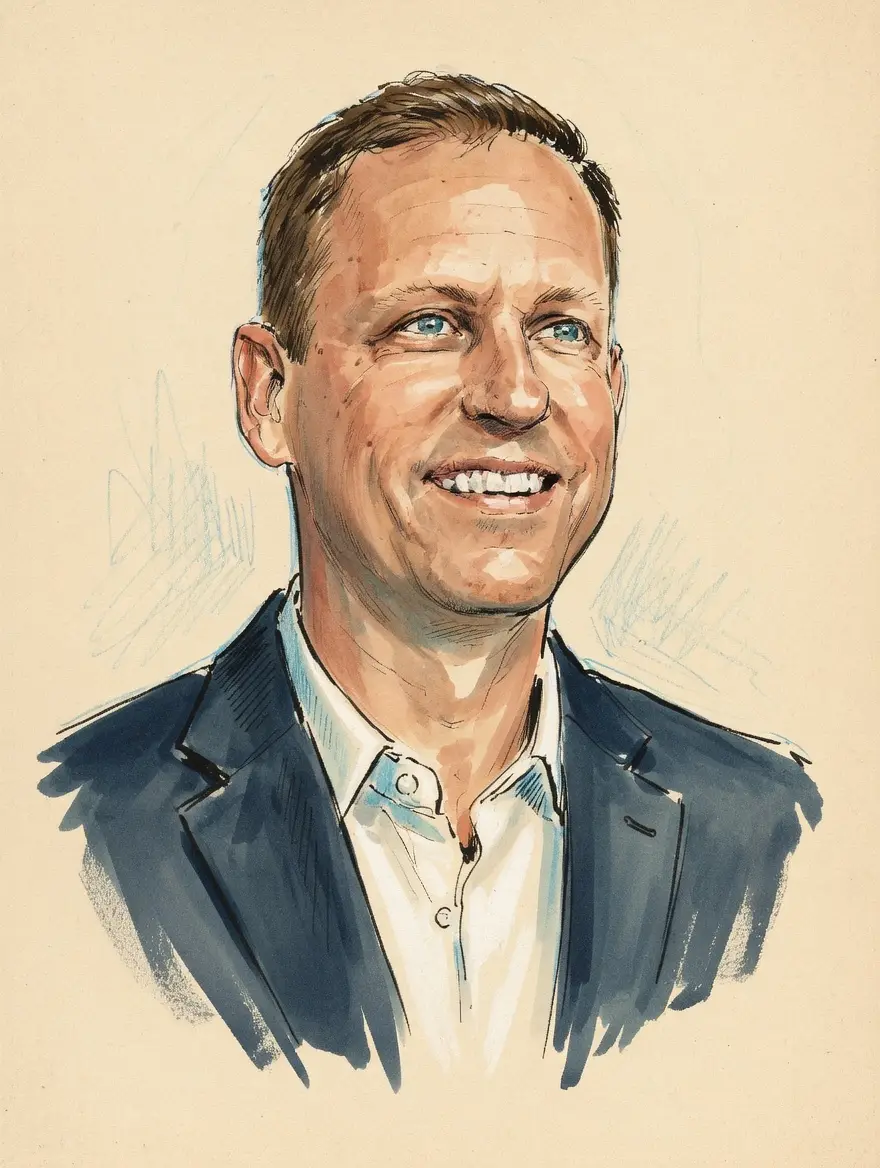
Peter Thiel on Technology
TL;DR
Peter Thiel expresses frustration over technological stagnation in 'atoms' while viewing unchecked AI progress as an existential risk.
Key Points
He asserts that post-1945, science and technology became apocalyptic, particularly with the advent of nuclear weapons.
He has expressed that the recent AI revolution feels like a significant event on par with the Internet in the late 1990s.
He critiques the concentration of AI development in major firms, noting its potential to be more of a substitute than a complement to human labor.
Summary
Peter Thiel views the history of modern technology since the mid-20th century as marked by a profound stagnation in 'atoms'—like transportation and medicine—while acknowledging massive strides in the world of 'bits,' such as computers and the internet. He argues that the brightest minds have been disproportionately drawn to software and finance, diverting talent from foundational physical sciences where progress has noticeably slowed since the 1960s. This deceleration, he suggests, is felt economically, as younger generations are not materially better off than their predecessors, despite overall scientific advances.
His perspective on contemporary technology is heavily shaped by apocalyptic concerns, where powerful new tools like Artificial Intelligence (AI) carry existential risk, echoing the danger introduced by nuclear weapons. He sees the current excitement around AI as potentially compensating for a lack of progress elsewhere, though he views the latest developments, like Large Language Models passing the Turing test, as significant inflection points. His deep concern is that unchecked technological advancement, without corresponding wisdom or limits, pushes society toward self-destruction, which he frames as a recurring historical pattern that demands caution and a shift in focus.
Key Quotes
“The antichrist comes to power by talking constantly about Armageddon, about rumours of wars and scaring you into giving him control over science and technology," said Thiel.
My placeholder is, it's looking probably on roughly the scale of the internet from 1990 to the late 90s.
Frequently Asked Questions
Peter Thiel believes the United States has experienced a significant stagnation in technological progress in physical domains, often referred to as 'atoms,' since the 1960s. While he acknowledges massive innovation in software and computing, he worries that the smartest minds are not focused on harder, foundational scientific problems.
Yes, Peter Thiel has long expressed concerns about Artificial Intelligence, even describing himself as having been 'allergic to AI' for a time. He views it as a key area of current technological progress but also as a significant existential risk, warning about autonomous weapon systems and uncontrolled escalation.
Thiel sees the AI boom as possibly the only vector of significant non-digital growth currently happening, suggesting that without it, society would appear totally stagnant. However, he believes the excitement may be overblown, comparing its potential GDP addition to that of the internet in the late 1990s.