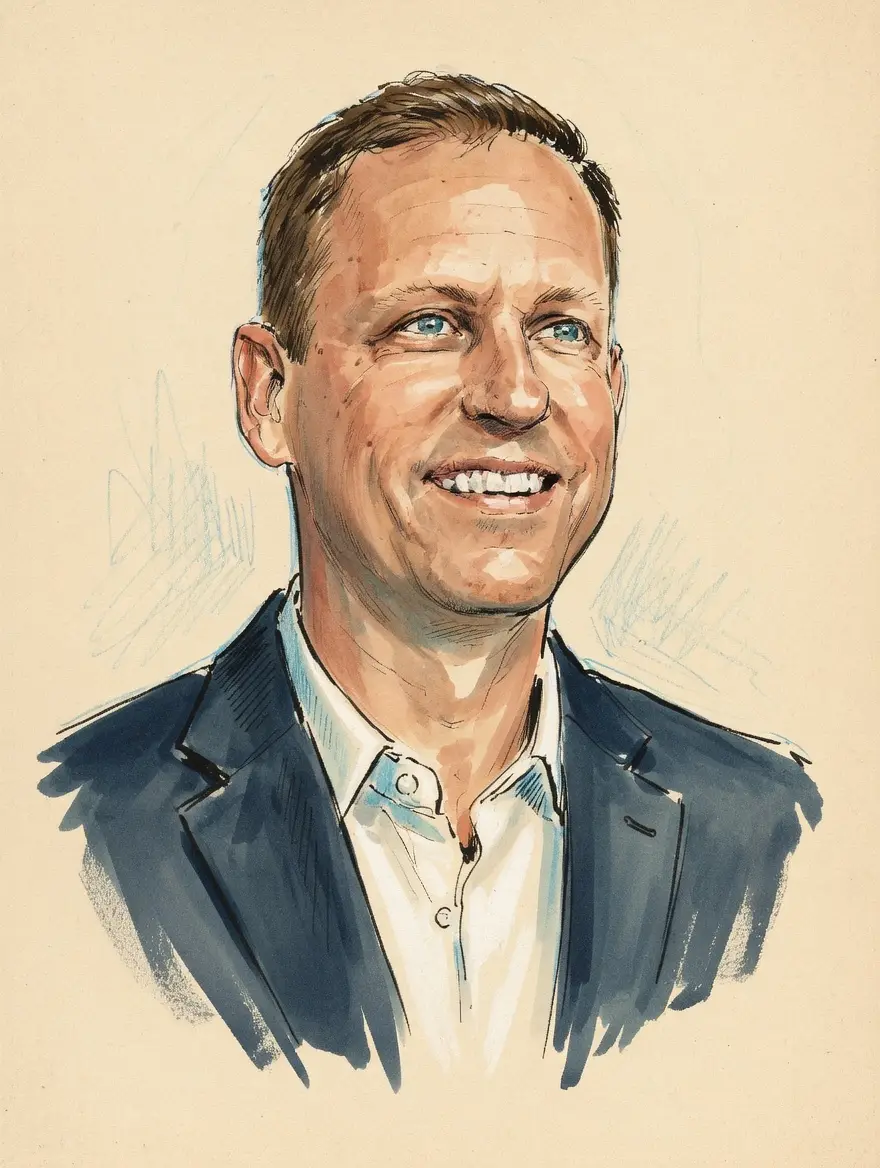
Peter Thiel on Government
TL;DR
Peter Thiel fundamentally views liberal democracy as incompatible with true progress and champions elite rule backed by technology.
Key Points
He stated in 2009 that he no longer believed that freedom and democracy are compatible.
He co-founded Palantir Technologies, a data analysis firm whose software has been used by US and UK intelligence apparatuses.
He financially supported efforts opposing a proposed 5% wealth tax on billionaires in California in December 2025.
Summary
Peter Thiel articulates a core belief that freedom and democracy are incompatible, a stance he has explicitly stated since 2009. He views popular accountability as a weakness that impedes progress, favoring instead a model of control architected by private actors like tech billionaires, which critics have characterized as techno-authoritarianism. Evidence for this lies in his philosophical leanings toward figures who support elite rule and his creation of opaque, powerful systems like Palantir, which operates in the shadows of public oversight while integrating vast datasets for institutional clients.
His influence is seen in his political activism, which involves substantial financial backing for right-wing figures and an ideological program that emphasizes disruption to dismantle the existing administrative state. While he identifies as a libertarian, his actions often align with an authoritarian impulse to concentrate decision-making power away from the collective, suggesting that for him, the form of governance matters less than ensuring that elites—those capable of creating genuine innovation—remain in charge, regardless of democratic constraints.
Key Quotes
Since 1920, the vast increase in welfare beneficiaries and the extension of the franchise to women … have rendered the notion of 'capitalist democracy' into an oxymoron.
Frequently Asked Questions
Peter Thiel is largely a democracy-skeptic libertarian who believes that liberal democracy hinders the radical progress he seeks. He has expressed that freedom and democracy are incompatible and suggests that elite rule, guided by visionary founders, is necessary for major advancements.
His core philosophical skepticism toward mass democracy appears consistent, dating back to at least 2009. However, his political activism has evolved from supporting traditional libertarian figures to becoming a significant patron of national conservatism and allies within the Trump administration.
He often criticizes the existing administrative state and government entanglement, asserting that it stifles innovation. Thiel has suggested that the government's capacities should be deployed to serve the agenda of powerful tech figures, particularly in areas like national security and countering foreign economic rivals.
Sources6
Peter Thiel, Would-Be Philosopher King, Takes on Democracy
Peter Thiel's Palantir poses a grave threat to Americans | Robert Reich | The Guardian
Peter Thiel Dreams of Empire | TechPolicy.Press
Peter Thiel - Wikipedia
Government, Economic Growth, and Speculative Investing with Peter Thiel
Oligarchs and the Trump Admin: Peter Thiel | Revolving Door Project
* This is not an exhaustive list of sources.