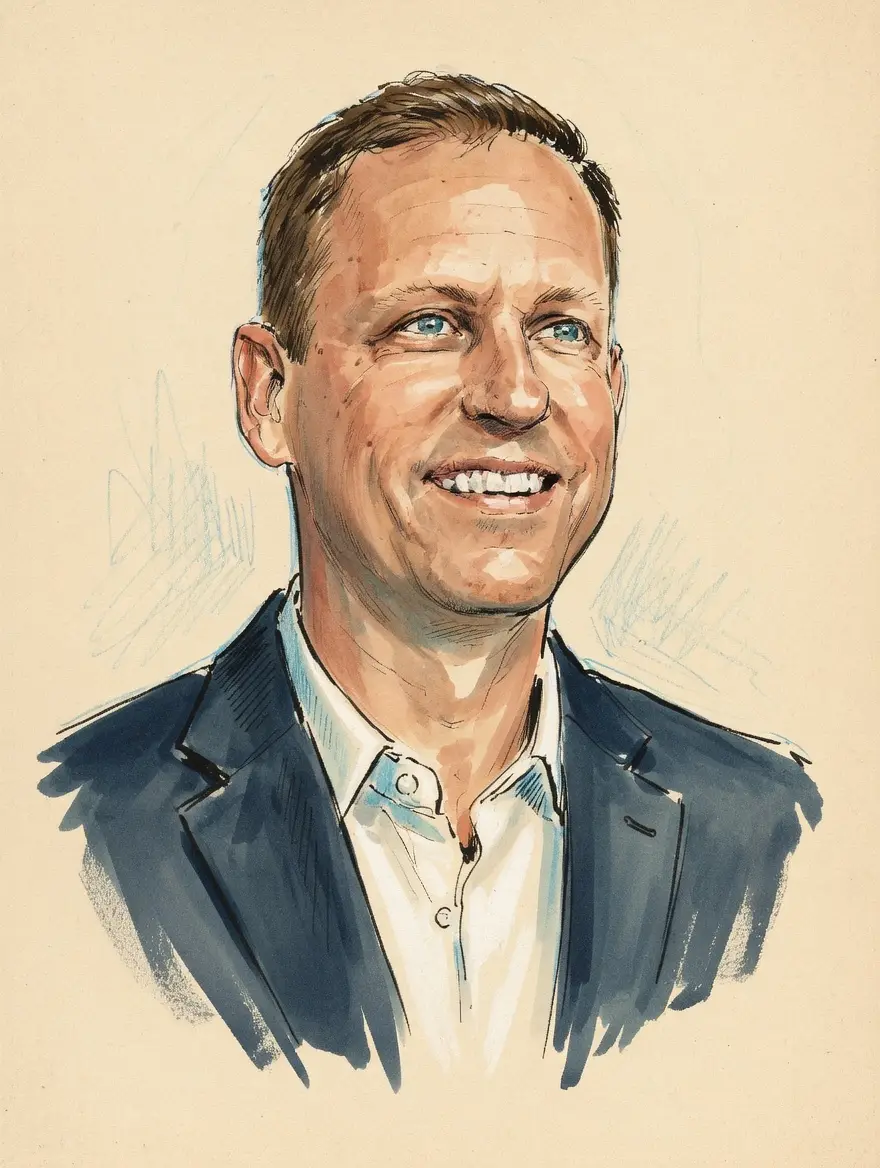
Peter Thiel on Cryptocurrency
TL;DR
Peter Thiel sees Bitcoin's best days as potentially behind it due to institutional co-option, contrasting with his earlier support for digital currency ideals.
Key Points
Founders Fund was reportedly an early institutional buyer of Bitcoin, starting around 2014, and liquidated a large portion before the 2022 market crash for an estimated $1.8 billion.
He identified Ethereum co-founder Vitalik Buterin as a recipient of the Thiel Fellowship in 2014, supporting his work in the decentralized digital currency space.
In more recent commentary, he expressed skepticism that Bitcoin’s best days are ahead of it, citing its increasing ownership by large institutions via products like ETFs.
Summary
Peter Thiel initially displayed interest and support for the ideals behind decentralized digital currency, which was reflected in his early investments and the fact that his fellowship supported Ethereum co-founder Vitalik Buterin. His firm, Founders Fund, was an early institutional buyer of Bitcoin starting around 2014, eventually liquidating a significant portion before the 2022 crash for substantial profits, and sources also suggest a resumption of crypto purchases in mid-2023. However, his more recent public commentary has expressed skepticism regarding Bitcoin's long-term disruptive potential, particularly as large financial institutions like BlackRock become heavily involved through regulated products like ETFs.
This later skepticism centers on the idea that Bitcoin is being "co-opted" by these large entities, potentially shifting power away from individuals and dampening the initial thesis of true decentralization. He has reportedly indicated that he feels under-invested in Bitcoin, juxtaposing this feeling with his caution about its future, and has also drawn a sharp ideological distinction between cryptocurrency and artificial intelligence, labeling crypto as "libertarian" and AI as "communist."
Key Quotes
Be something where you have a choice between different currencies, and the choice is not left to the sovereign but to the individual, and in a sense, the individual becomes sovereign and is able to make choices regarding which currency they want to take.
Frequently Asked Questions
Peter Thiel's more recent position suggests that Bitcoin's best days may be behind it. He has expressed concern that its increasing ownership by large financial institutions, for example through spot Bitcoin ETFs, is co-opting the asset. This trend, in his view, dampens the initial thesis about Bitcoin's potential as a truly independent and decentralized force.
Yes, Peter Thiel was an early institutional investor in cryptocurrencies. His firm, Founders Fund, began buying Bitcoin as early as 2014 and subsequently invested in projects like Block.one. Furthermore, his Thiel Fellowship supported Vitalik Buterin, the co-founder of Ethereum, which is the second-largest cryptocurrency.
The venture capitalist drew a clear ideological contrast between the two technologies. He characterized cryptocurrency as fundamentally "libertarian" due to its decentralizing nature. Conversely, he described artificial intelligence as "communist" because its development tends toward centralization and control.