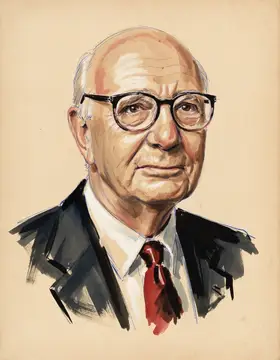
Paul Volcker on Shock Therapy
TL;DR
Paul Volcker deliberately engineered harsh monetary tightening, known as shock therapy, to decisively crush embedded inflation expectations.
Key Points
He explicitly crossed out the word "gradual" in policy explanations because he wanted to finish the process once started.
The deliberate tightening caused interest rates to spike to as high as 20 percent, triggering a severe recession.
He believed inflation was a moral failure that corroded essential trust in government by undermining the currency's value.
Summary
Paul Volcker, as Chairman of the Federal Reserve beginning in August 1979, viewed the accelerating inflation of the 1970s as a corrosive force that required absolute commitment to destroy. He believed that gradual measures to control the money supply had failed previously, so his appointed strategy was an American-style shock therapy. This involved fundamentally changing operating procedures to allow interest rates to rise as high as necessary to squeeze inflation out of the system, rejecting any notion of gradualism to ensure the market received a message that the fight would be finished. He consciously accepted the resulting severe recession, which saw unemployment peak near 11 percent and prime lending rates exceed 20 percent, viewing it as the necessary price for long-term stability.
The implications of his decisive action were widespread, leading to the "Volcker Shock" and subsequent economic pain that contributed to a political shift. However, the approach was ultimately successful in lowering inflation to historic lows by the mid-1980s, establishing the Federal Reserve's modern credibility for price stability. While defenders argue that less severe measures would not have worked against deeply embedded inflationary expectations, critics note the significant, disproportionate suffering inflicted upon American workers and the triggering of a global debt crisis in the developing world. Nevertheless, the deliberate application of painful monetary contraction is the core of his historical legacy on policy.
Key Quotes
The doctor says, 'I know you don't like this, but it's good for you.'
From today's vantage point, was there a better path? Not to my knowledge — not then or now.
I used to cross it out every time, because I wanted to get the message through that once we'd started the process we wanted to finish it.
Frequently Asked Questions
Yes, Paul Volcker himself described his approach to tackling inflation as a necessary shock therapy, American style. He believed this decisive action was required to shatter deeply embedded inflationary expectations.
The main consequence was the successful reduction of double-digit inflation to low single digits, establishing modern central bank credibility. However, it was also accompanied by a sharp, deep recession with high unemployment.
He acknowledged the pain and hardship inflicted, comparing his role to a doctor administering necessary but unpleasant medicine for the overall good of the country. He maintained the difficult actions were unavoidable to prevent ruinous inflation.
Sources8
Volcker's Bear - Under the Microscope - Obsidian Publish
Global Implications of the Fed's Rate Hikes | FSI
Commanding Heights : Paul Volcker | on PBS
Tame US inflation carefully or risk some nasty side-effects
The ripple effect of the Volcker Shock for the economy | JMGshortcuts
Systems Thinking Through: The Volcker Shock
A FINANCE LEGEND: A FINANCE LEGEND
How Paul Volcker stopped inflation in the 1970's (2017) [00:04:06] : r/Documentaries
* This is not an exhaustive list of sources.