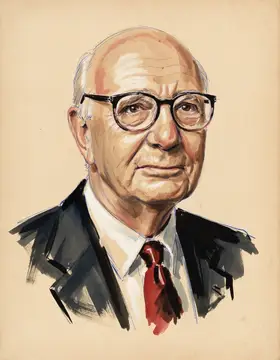
Paul Volcker on Jimmy Carter
TL;DR
Paul Volcker was nominated by President Jimmy Carter to aggressively fight high inflation, leading to significant economic adjustments.
Key Points
The President nominated Paul Volcker to be Federal Reserve Chairman in July 1979, succeeding G. William Miller.
At his swearing-in ceremony on August 06, 1979, Volcker stated he shared the administration's priorities on fighting inflation.
Volcker's subsequent policies, aimed at reining in inflation, were widely credited with ending the high inflation of the 1970s.
Summary
Paul Volcker's relationship with Jimmy Carter is defined by his appointment as Federal Reserve Chairman in August 1979, succeeding G. William Miller as part of a cabinet shakeup to address persistently high inflation. Volcker made it clear during his confirmation hearing that his top priority would be fighting inflation, even while acknowledging that the necessary measures could cause economic strain. Carter, determined to maintain a steady course against inflation, expressed confidence in Volcker's qualifications and commitment to a responsible monetary policy, assuring the public of a partnership between the administration and the independent Fed. The President had sought a nominee who would confront the severe economic environment, which included inflation threatening to rise further and a dollar that had lost significant value against foreign currencies.
Despite the economic disruption that Volcker's restrictive policies—the 'Volcker shock'—later caused, including a severe recession and protests from affected sectors, the initial appointment signaled a serious intent from the Carter administration to tackle the decade-long inflationary problem. Volcker himself acknowledged the unique economic difficulties and the need to make progress with problems in clearer perspective, while assuring maintenance of the Fed's integrity and professionalism within the government's framework. Although Volcker's subsequent actions led to his tight money policies being politically scrutinized by members of both parties, the selection process highlights Carter's willingness to appoint an inflation hawk capable of taking decisive, though painful, action.
Key Quotes
I cherish its integrity. I cherish its professionalism.
Frequently Asked Questions
Jimmy Carter appointed Paul Volcker to succeed G. William Miller as Federal Reserve Chairman to combat the persistent and high inflation plaguing the US economy. The selection signaled a growing discontent with the ongoing economic woes, known as stagflation. Volcker was viewed as superbly qualified to maintain a sound dollar and pursue a strong anti-inflationary course.
Yes, the President and Volcker committed to honoring the independence of the Federal Reserve System while working toward the same objective of controlling inflation. Carter had sought a nominee who would confront inflation head-on, which is exactly what Volcker began doing after his October 1979 announcement. However, the administration grew nervous as unemployment rose due to the tight monetary policy.
Although President Ronald Reagan's administration faced political pressure regarding the high interest rates, Reagan renominated Paul Volcker to a second term as Fed Chairman in 1983. This demonstrated a continuation of the anti-inflation fight, which ultimately succeeded in bringing inflation down significantly. Volcker served until 1987, succeeding Carter's term.
Sources6
Volcker's Announcement of Anti-Inflation Measures | Federal Reserve History
Department of the Treasury and the Federal Reserve System Remarks at the Swearing In of G. William Miller as Secretary of the Treasury and Paul A. Volcker as Chairman of the Board of Governors of the Federal Reserve System.
Jimmy Carter Picked A Fed Chair For Treasury Secretary—And It Gave Us Paul Volcker
Paul Volcker - Wikipedia
Unlike Nixon and Ford, Jimmy Carter was willing to use hikes in ...
HOUR 3 Jimmy Carter's Federal Reserve Legacy: How Paul Volcker Appointment Shaped 40 Years of American Prosperity 1-04-25
* This is not an exhaustive list of sources.