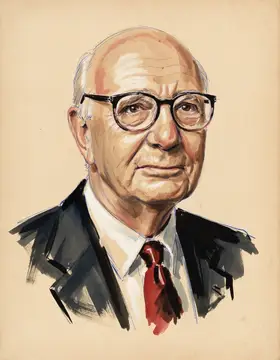
Paul Volcker on Interest Rates
TL;DR
Paul Volcker believed aggressively raising interest rates was a necessary, painful tool to decisively break entrenched high inflation.
Key Points
He raised the federal funds rate to a peak of nearly 20 percent between 1979 and 1982 to combat high inflation.
The initial restrictive policy actions in October 1979 were characterized by a shift to managing bank reserves more closely to better control money supply growth.
The resulting disinflation, though successful in reducing the annual inflation rate below 3 percent by 1983, cost the economy a sharp recession where unemployment reached nearly 11 percent.
Summary
Paul Volcker, as Chairman of the Federal Reserve, took a strong, proactive stance on interest rates as the primary means to combat the high inflation of the late 1970s and early 1980s. His core position, evidenced by the measures known as the Volcker shock, involved driving the federal funds rate to historic highs, peaking near 20 percent in 1981, to forcibly slow the growth of the money supply and re-anchor inflation expectations. He argued that this restrictive policy, despite causing severe recession and high unemployment, was essential to restore credibility and prevent long-term economic instability from runaway price increases.
This aggressive approach evolved from an initial period where the Federal Open Market Committee, under his leadership, signaled a shift by changing operating procedures in October 1979 to better manage reserves, aiming to gain credibility. While his early actions in 1979–1980 only temporarily contained inflation, the period from late 1980 onwards saw a sustained commitment to tight monetary policy, which financial markets initially viewed with skepticism, reflecting in stubborn long-term rates. Ultimately, this resolve succeeded in bringing the inflation rate down from double digits to below 3 percent by 1983, laying the groundwork for a sustained period of lower inflation.
Frequently Asked Questions
Paul Volcker's primary action was to aggressively raise short-term interest rates, such as the federal funds rate, to unprecedented levels. He believed that only a painful and determined commitment to high rates would break the public's expectation that high inflation would continue indefinitely. This policy became known as the 'Volcker shock'.
He viewed the resulting recession and high unemployment as a necessary, though unfortunate, cost of achieving long-term price stability. Volcker felt that allowing high inflation to persist would cause even greater, more prolonged economic harm in the future. His priority was the restoration of the Federal Reserve's credibility on controlling inflation.
During his tenure as Chairman, Volcker's stance remained committed to using interest rates to fight inflation, even when facing intense political pressure. The commitment was sustained even after an initial easing of policy in 1980, leading to the sustained tight policy of 1981-1982 that finally broke the inflation cycle.
Sources5
Volcker's Announcement of Anti-Inflation Measures | Federal Reserve History
Paul Volcker - Wikipedia
Global Implications of the Fed's Rate Hikes | FSI
Stop Lionizing Paul Volcker and Villainizing Arthur Burns | Cato at Liberty Blog
The incredible Volcker disinflation
* This is not an exhaustive list of sources.