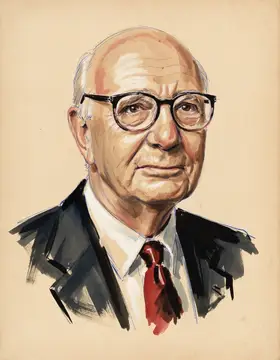
Paul Volcker on Gold Standard
TL;DR
Paul Volcker was a steadfast opponent of returning to a formal gold standard, viewing it as too restrictive for modern economies.
Key Points
He viewed a return to a formal gold standard as too restrictive for necessary modern monetary policy responses.
His tenure involved managing the aftermath of the final collapse of the Bretton Woods system in the early 1970s.
Volcker supported the need for an independent central bank capable of discretionary action, which a gold anchor prevents.
Summary
Paul Volcker, throughout his career, maintained a staunchly negative position regarding the reestablishment of a formal gold standard for the United States economy. His primary concern centered on the inflexibility and constraints that a commodity-backed system would impose on a central bank's ability to manage monetary policy, particularly in responding to crises or managing employment levels. This view stemmed from his experience navigating the inflationary challenges of the 1970s, which many critics blamed on the preceding abandonment of the system, though he did not share this diagnosis of the root cause.
He argued that discretionary monetary policy, unconstrained by the fixed exchange rates and supply limitations of gold, was necessary for achieving macroeconomic stability and promoting growth. While he presided over the end of the Bretton Woods system, his actions following that pivot demonstrated a preference for managing the money supply directly rather than returning to a metallic anchor. The former Fed Chair regarded the discipline of gold as insufficient to prevent severe economic downturns or inflationary spirals in the complex, modern global financial environment.
Frequently Asked Questions
Paul Volcker was a firm opponent of the gold standard, believing it would severely limit a central bank's ability to stabilize the economy. He preferred a flexible monetary policy unconstrained by a fixed metallic anchor. He saw the system as an inappropriate constraint for a complex modern economy.
No, Volcker did not advocate for returning to a gold-backed currency. His actions and statements indicated a preference for managing the money supply directly through central bank tools. He believed such discretionary control was vital for fighting inflation and managing economic downturns.
Volcker expressed that the gold standard imposed unacceptable rigidity on monetary policy, preventing effective responses to financial instability or high unemployment. He felt that this inflexibility was detrimental to economic management. He favored discretion over fixed rules.
Sources10
Paul Volcker and Gold
Paul Volcker: Foe of the Gold Standard, Fan of Monetary Chaos?
Paul Volcker, The Man Who Vanquished Gold
Paul Volcker: Drop Gold Standard?
All That Glitters: A Primer on the Gold Standard (PDF)
The complicated legacy of Paul Volcker
The Case for Gold
Interview with Paul A. Volcker
How Volcker Created a Gold Standard Without Gold
The Gold Standard: A Review of Historical Experience
* This is not an exhaustive list of sources.