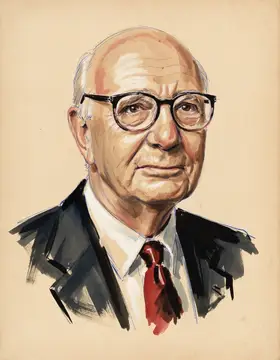
Paul Volcker
- Known for
- Federal Reserve Chairman, ended 1970s inflation
- Born in
- Cape May, United States
- Education
- M.A. political economy, London School of Economics
Paul Volcker is best known as the 12th Chairman of the Federal Reserve (1979–1987), where he implemented the controversial Volcker Shock to conquer crippling U.S. inflation. An economist trained at Princeton and Harvard, his career spans Treasury, central banking, and high-level post-crisis advisory roles, defining him as a pragmatic figure focused on sound money and government effectiveness.
Signature Positions
Volcker’s tenure and subsequent work focused on monetary stability and government reform:
- Inflation: Credited with ending the 1970s inflation by raising the Interest Rates dramatically, peaking the federal funds rate at 20%.
- Federal Reserve: Oversaw monetary policy actions that deliberately triggered the 1980–1982 Recession to break inflationary expectations.
- Financial Regulation: Championed the Volcker Rule post-2008 crisis, advocating for breaking up large banks and restricting risky proprietary trading.
- Gold Standard: Played a key role in the 1971 decision to suspend the dollar's convertibility to gold, marking the collapse of Bretton Woods.
Notable Tensions
His career involved navigating significant political and economic friction:
- Reagan Administration: Faced intense political pressure, including an order from James Baker in 1984 to avoid raising Interest Rates before the election.
- Political Criticism: The high rates during the Volcker Shock spurred major protests, including blockades of the Eccles Building by indebted farmers and builders.
- Stiglitz Critique: Nobel laureate Joseph Stiglitz noted Volcker's perceived regulatory inadequacy, though this view contrasts with Volcker's post-2008 push for stricter banking oversight.
Following his Fed tenure, Volcker remained highly active in public service, chairing the Economic Recovery Advisory Board for Barack Obama during the subprime mortgage crisis. He dedicated his later years to governance reform through the Volcker Alliance, seeking to improve public sector accountability and execution of policy.