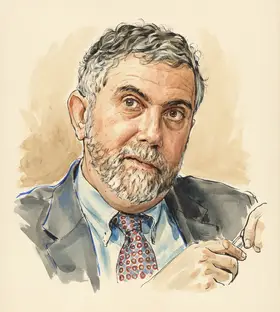
Paul Krugman on Social Security
TL;DR
Paul Krugman strongly argues Social Security is sustainable and should be preserved without benefit cuts through revenue adjustments.
Key Points
He believes Social Security is a government program supported by a dedicated tax, not a 'Ponzi scheme' or a private pension fund.
He noted that in December 2004, the estimated exhaustion date for the trust fund was receding into the future, suggesting good performance.
Krugman argues that the projected shortfall is a manageable fiscal issue, roughly equivalent to the proposed tax cuts for the wealthy over a decade.
Summary
Paul Krugman maintains that Social Security is a highly successful government program that has been instrumental in nearly eliminating poverty among the elderly. He asserts that the program is not inherently unsustainable due to demography, a common claim he contends is stuck in a time loop from earlier decades. He views the necessary financial adjustments as a matter of political choice rather than an inescapable crisis, noting that current payroll tax receipts cover a significant portion of scheduled benefits even if the trust fund is depleted.
He argues that concerns about long-term shortfalls are often exaggerated, pointing to the fact that projections have historically been overly dire, and that many Republican proposals favor massive tax cuts over revenue increases to cover shortfalls. Krugman suggests that sustaining the program without benefit cuts is well within America's financial means, perhaps requiring revenue adjustments like raising or eliminating the FICA maximum, which would be less economically disruptive than large cuts or privatization efforts.
Frequently Asked Questions
Paul Krugman is a strong advocate for defending Social Security in its current form, emphasizing its success in reducing elderly poverty. He argues the program is fiscally sustainable with modest adjustments to revenue, not through benefit cuts.
His core stance has been consistently in defense of the program against privatization or benefit cuts, which he views as political choices. In 2005, he argued against proposed private accounts, maintaining a similar position in 2023 regarding its sustainability.
He asserts that the program is not doomed by demography and can be sustained. While acknowledging a financial path toward trust fund exhaustion, he contends that the required revenue to maintain full benefits is a small fraction of GDP, well within the nation's means.
Sources7
The Clean Little Secret of Social Security
Why Medicare and Social Security Are Sustainable
What Paul Krugman Gets Wrong About Social Security
Paul Krugman: Why Medicare and Social Security Are Sustainable
Paul Krugman Columnist Breaks Down Social Security
Nobel Laureate Economist Paul Krugman Details Decades of GOP Plans to Cut Social Security and Medicare
Paul Krugman Says Social Security Is Sustainable. It's Really Not.
* This is not an exhaustive list of sources.