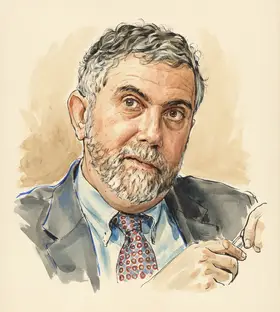
Paul Krugman on National Debt
TL;DR
Paul Krugman generally views national debt concerns as exaggerated or politically motivated, stressing fiscal space when deficits are needed for recovery.
Key Points
He argued in the early 2010s that the U.S. had significant "fiscal space" to run deficits to restore full employment after the 2008 crisis.
He contends that a major reason for current debt concern is the loss of political seriousness and irresponsible fiscal policies enacted by one political party.
He has pointed out that the US, unlike countries in historical debt crises, borrows in its own currency, which lessens the risk of a liquidity crunch.
Summary
Paul Krugman has asserted that worries about the United States national debt are often overstated, especially when the economy requires significant deficit spending for recovery, such as after the 2008 financial crisis. He previously argued that advanced nations possess ample fiscal space to sustain higher debt levels without immediately losing investor confidence, a faith he bases on historical precedent like post-war UK debt levels, assuming competent governance will act responsibly when emergencies subside. He also noted that countries experiencing crises typically borrow in other currencies, a vulnerability the US, as the issuer of its own currency, does not face regarding a liquidity crunch.
However, he indicated a shift in his view in a 2025 article, suggesting that current conditions warrant concern because the economic emergency justifying large deficits is over, while America's fiscal space has been reduced by political actions. He directly criticizes Republican policies for increasing the debt through tax cuts and new spending, arguing these actions demonstrate a lack of seriousness that raises the actual risk of a debt crisis, regardless of previous historical norms. He implies that the primary driver of current debt concern should be current fiscal irresponsibility rather than the absolute level of debt itself.
Key Quotes
I don’t want to say that debt doesn’t matter at all. But it clearly matters a lot less than the fear mongers tried to tell us.
Frequently Asked Questions
Paul Krugman is currently more concerned about the national debt trajectory than he was a decade ago, primarily due to what he views as a lack of serious fiscal governance. He argues that running large deficits is no longer economically necessary but continues because of political decisions like tax cuts, which reduce the nation's fiscal space.
Yes, his stance has evolved to be more cautious, particularly since 2025. While he previously downplayed debt fears when deficits were needed for recovery, he now sees current deficit spending without an emergency as making the debt riskier due to perceived political mismanagement.
Paul Krugman suggests the risk of a true debt crisis in the US is lower than for countries borrowing in foreign currencies, as the US can print its own money. However, he warns that political missteps and a loss of investor confidence in the government's competence to manage finances can still lead to problems like spiking interest rates.
Sources6
Trump’s Big Beautiful Debt Bomb
The national debt: How and why the US government borrows money
Addressing Paul Krugman's Case Against Debt Worry - Foundation
Actually, Paul, the Debt is Still a Problem-2014-07-25
Why You Shouldn't Listen to Paul Krugman - AAF
Remember, the U.S. doesn't have to pay off all its debt, and there's an easy way to fix it, Nobel laureate Paul Krugman says [hike taxes or reduce spending by 2.1% of GDP] : r/Economics
* This is not an exhaustive list of sources.