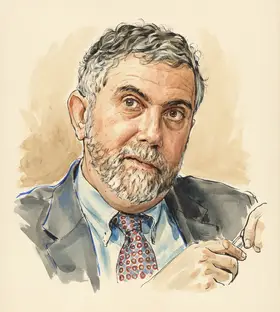
Paul Krugman on Interest Rates
TL;DR
Paul Krugman finds the medium-term direction of interest rates unclear, resisting simple predictions based on current conditions.
Key Points
He considers it entirely unclear whether interest rates will return to pre-pandemic levels or remain structurally higher as of May 2024.
He argued that the argument for cutting rates based on projected AI-driven productivity gains is flawed, as such spending often requires higher rates to avoid overheating.
During the early 2010s recession, he maintained that government debt was not an immediate concern and that persistent low rates reflected a depressed economy, not necessarily just Fed manipulation.
Summary
Paul Krugman's position on interest rates is characterized by a reluctance to make definitive medium-term forecasts, often describing himself as "fanatically confused" about whether borrowing costs will return to pre-pandemic norms or remain elevated. He acknowledges that the Federal Reserve directly controls short-term rates, but notes that longer-term rates, which affect mortgages and loans, are behaving unusually, sometimes rising even when the Fed cuts its target rate. He has explored various explanations for this divergence, including market expectations regarding future inflation and the potential economic impact of new political leadership.
Historically, Krugman has argued that in a depressed economy with low private investment, interest rates should naturally be very low, and the Fed has the power to control short-term rates, making predictions of immediate disaster from high debt unwarranted in the short run. However, he is pragmatic, stating he would become a 'debt hawk' once out of a depression and has acknowledged being 'flabbergasted' by surprises like negative rates, though he criticizes others for claiming nobody could have predicted low rates in general. Ultimately, he suggests current market behavior may signal a risk premium related to political uncertainty that could drive rates higher if certain economic policies are implemented.
Frequently Asked Questions
Paul Krugman expresses strong uncertainty about the medium-term trajectory of interest rates, stating he is 'fanatically confused' about their future level. He believes the Federal Reserve controls short-term rates but acknowledges that long-term rates, which matter for consumers, are not moving predictably with the Fed's actions. His view is context-dependent, shifting based on the state of the economy, inflation, and political risk.
His perspective has evolved with economic conditions; for example, he was willing to become a 'debt hawk' once a recession ended, shifting focus away from expansionary policy. He has also admitted being 'flabbergasted' by certain developments, like the move to negative rates, showing a willingness to revise his outlook based on surprising market data.
Krugman has dismissed fears that high government debt inevitably leads to soaring interest rates in the US, arguing that the mechanism for such a catastrophe is not well-thought-out by critics. He suggests that in a depressed economy, low rates are natural and the central bank can manage short-term rates to prevent spikes.
Sources7
Nobel laureate Krugman “fanatically confused” on interest rates
No, AI Doesn’t Justify Lower Interest Rates
Paul Krugman on Debt, but Are Soaring Interest Rates Running Against Him?
Krugman on Interest Rates - Econlib
Paul Krugman Asked Me About Modern Monetary Theory. Here Are 4 Answers.
Must-Read: Paul Krugman: Nobody Could Have Predicted, Interest Rates Edition
* This is not an exhaustive list of sources.