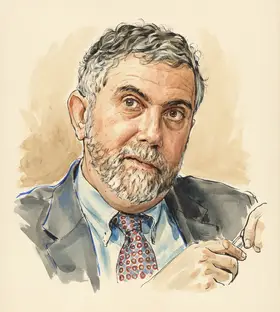
Paul Krugman on Inequality
TL;DR
Paul Krugman strongly advocates for reducing modern income and wealth inequality through active government policy and intervention.
Key Points
The post-1980 rise in U.S. inequality has brought income disparity back to levels not seen since 1929.
Financialization of the economy after 1980 is seen as a major driver of rising income and wealth inequality through high financial elite earnings.
He advocates for policies like universal healthcare and nutrition assistance to improve long-term prospects for poor children and reduce inequality.
Summary
Paul Krugman views the soaring levels of income and wealth inequality in the United States since the late 1970s as a major concern, contrasting sharply with the more egalitarian post-WWII era. He sees contemporary inequality as having deep political and structural roots, arguing that while factors like technology and trade play a role, political shifts, the erosion of unions, and the influence of big money are critical drivers. He points to quantitative evidence showing that current U.S. inequality levels are higher than what would be expected in a truly democratic polity where the majority's interests prevail.
His proposed solutions require government action, as the market alone will not create equitable outcomes. He advocates for restoring progressivity to the tax system, strengthening social insurance programs like healthcare and aid for poor children, and reversing policies that favor the wealthy. The economist emphasizes that inequality is linked to political polarization and that curbing the political power of extreme wealth through campaign finance reform and strengthening countervailing institutions like unions is necessary to create a virtuous cycle of lower inequality and fairer policy.
Key Quotes
The general public would like to see welfare and social insurance programs strengthened, not cut back,” he says. “The elite would like to see them cut back. Then you ask, where is the conventional wisdom? It's that the deficit is a terrible problem and we must cut back on entitlement programs."
Frequently Asked Questions
Paul Krugman's primary concern is that rising inequality concentrates income in the hands of a few, meaning the fruits of overall economic growth are not widely shared. He also links high inequality to an inherently undemocratic political system where the economic elite holds disproportionate power.
No, Paul Krugman firmly believes that the market itself cannot create more equitable outcomes, necessitating active government intervention. He argues that policies like progressive taxation and social insurance are crucial tools that must be used to mitigate disparities.
He often cites the period following World War II up until the late 1970s as an era of a much more equal, middle-class society in the United States. He suggests this relative equality was engineered by deliberate political compression of wage differentials.
Sources7
Wealth and Power. Paul Krugman, Understanding Inequality: Part VI
Global Inequality: Branko Milanovic
Paul Krugman on Reducing Inequality | UBS Nobel Perspectives
Inequality and crises: coincidence or causation?
Politics, Policy, and Inequality | Economic Policy Institute
Learn Economist Paul Krugman's Perspective on Inequality
* This is not an exhaustive list of sources.