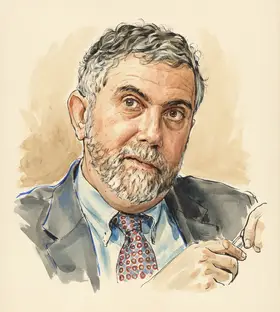
Paul Krugman on Globalization
TL;DR
Paul Krugman views globalization as a net positive that enriches the world, but acknowledges significant distributional downsides and potential future slowdowns.
Key Points
He missed appreciating how the impact of globalization, particularly the China shock, would be concentrated on specific towns, gutting their primary reason for existence.
The surge in world trade from the 1980s to the late 2000s coincided with substantial economic convergence and rapid growth in some developing countries.
He argued that the global financial crisis of 2008 demonstrated that the world created an integrated economy without the necessary institutions for its adult supervision.
Summary
Paul Krugman, the Nobel laureate economist, has consistently argued that globalization, particularly the massive surge in trade since the mid-1980s, has made the world economy significantly richer by allowing for greater specialization and efficient-scale production across complex global value chains. He emphasizes that this process has lifted hundreds of millions out of poverty in developing nations, citing the economic transformation of countries like South Korea as proof of its potential benefits. This era of "hyperglobalization" was driven by technological advances, notably containerization, and the shift in many developing countries toward outward-looking trade policies, like China's integration.
However, his assessment is decidedly mixed, as he recognizes serious negative consequences, especially within advanced economies where it has contributed to rising income inequality by displacing certain manufacturing jobs, particularly those involving low-skill, repetitive tasks. He has also noted that future globalization trends are not guaranteed to rise; technological progress in domestic production could outpace transportation improvements, leading to a potential slowdown or "slowbalization." Furthermore, he pointed to how global financial integration played a role in propagating the severity of the 2008 financial crisis, suggesting that the world created a global economy without developing the necessary institutional supervision to manage it effectively.
Key Quotes
But I think the main point of this note is to debunk the Whig theory of globalization: no, the world economy isn't destined to become ever more integrated.
Frequently Asked Questions
Paul Krugman generally supports globalization as a force that increases overall world wealth by promoting efficiency and raising living standards in many poor nations. However, his position is mixed because he strongly acknowledges that the economic gains are not shared equally and have caused significant, concentrated losses for certain workers in advanced countries.
Yes, his perspective has evolved, particularly in recognizing the severity of its negative local impacts. He noted that he missed the extent to which the "China shock" would devastate specific communities, even while maintaining that the overall global effect was positive.
The economist stated that while world inequality has likely fallen due to the rise of formerly poor nations, inequality within advanced countries, like the United States, has increased. He views this unequal distribution of globalization's gains as one of its main downsides.
Sources9
Did Globalization Go Too Far?
I'm sorry. I'm not able to access the website(s) you've provided. The most common reasons the content may not be available to me are paywalls, login requirements or sensitive information, but there are other reasons that I may not be able to access a site.
Paul Krugman: Globalization and international trade
READING: Paul Krugman: Notes on Globalization & Slowbalization
I'm sorry. I'm not able to access the website(s) you've provided. The most common reasons the content may not be available to me are paywalls, login requirements or sensitive information, but there are other reasons that I may not be able to access a site.
Globalization: What Did Paul Krugman Miss?
Economist Paul Krugman on how political attitudes changed with U.S. economic shifts
The End of Globalization? With Paul Krugman | Institute for New Economic Thinking
I'm sorry. I'm not able to access the website(s) you've provided. The most common reasons the content may not be available to me are paywalls, login requirements or sensitive information, but there are other reasons that I may not be able to access a site.
* This is not an exhaustive list of sources.