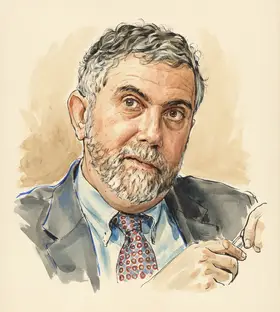
Paul Krugman on China
TL;DR
Paul Krugman views China as an economic and technological challenger whose massive trade surplus requires a policy response centered on subsidies.
Key Points
He argued in 2025 that US policies under a specific administration have guaranteed the US will likely never catch up to China's technological and economic prowess.
He contends that China's trade surplus in manufactured goods is an unprecedented share of world GDP, creating economic disruption and national security concerns.
Krugman favors subsidies over tariffs as the primary policy tool to support domestic industries against foreign competition, including from China.
Summary
Paul Krugman views China as an enormous economic rival that has overtaken the United States in crucial areas like clean energy production and electricity generation. He has noted that China's economy, when measured by purchasing power parity, is already larger than America's, representing a significant shift in global economic might away from the traditionally liberal world order. The core concern Krugman expresses is that China's autocratic regime might weaponize its growing control over global economic chokepoints and future industries, such as solar panels and electric vehicles.
To counter this, the economist argues against crude protectionism like tariffs, which he believes are often the wrong tool and can raise domestic production costs, as seen with the impact of tariffs on steel. Instead, Krugman advocates for a targeted industrial policy, primarily using subsidies to support domestic industries that are either crucial for national security, key to future economic growth, or vital for maintaining community stability against disruptive trade flows. He maintains that failing to respond to China's massive and growing trade surplus risks the West losing its technological edge and global leadership status.
Key Quotes
Trump has also proved willing to be moved by Chinese promises to resume purchases of U.S. soybeans. You might say that he ceded the future to China in return for a hill of beans.
Frequently Asked Questions
According to his writings, Paul Krugman's main concern is China's enormous and growing trade surplus, which he believes is unprecedented relative to the world economy. He fears this reliance on exports allows an autocratic regime to gain control over crucial economic chokepoints and the industries of the future. He has stated this challenge requires a serious policy response from the US and Europe.
Krugman generally believes tariffs are the wrong policy tool for addressing China's trade surplus, according to an analysis in early 2026. He stated that subsidies are almost always a better choice because tariffs raise prices for consumers and increase costs for domestic industries that use imported inputs. He notes that tariffs have failed to significantly lower US import prices.
Yes, in a late 2025 post, Paul Krugman suggested that the US is no longer contesting global leadership and the race is essentially over unless a future president engineers a miraculous recovery. He attributed this decline partly to the abandonment of supportive policies for renewable energy and technology manufacturing, contrasting this with China's advancements.
Sources5
China’s Trade Surplus, Part III
Paul Krugman: China has overtaken American and nowhere is that more clear than clean energy. And because of the damage that Trump is doing to our renewable sector, we will never catch up : r/climatechange
Nobel laureate Paul Krugman agrees Beijing is making too much stuff: 'The world will not accept everything China wants to export'
* This is not an exhaustive list of sources.