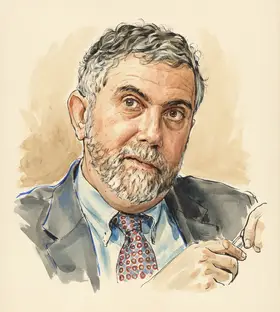
Paul Krugman on Austerity
TL;DR
Paul Krugman views austerity as a destructive policy that harms economic growth and was wrongly pursued after the 2008 financial crisis.
Key Points
He argued that the turn toward austerity around 2010 was a shift based on groupthink rather than careful analysis of the economic situation.
Krugman contended that countries like the US and UK, which borrow in their own currencies, could not face the type of funding crisis Greece experienced.
He suggested that the long-run damage from austerity policies was greater than initially anticipated, potentially crippling long-run growth prospects.
Summary
Paul Krugman positioned himself as a vocal critic of the widespread adoption of austerity policies across the Western world following the 2008 financial crisis. He argued that imposing spending cuts and tax increases on already depressed economies was contrary to mainstream, textbook economics, especially when interest rates were near zero. He contended that the promised confidence boost from fiscal tightening, which he nicknamed the "confidence fairy," failed to materialize, and instead, countries with severe austerity suffered deeper economic damage, as evidenced by cross-country comparisons.
His analysis frequently focused on the unique nature of the post-crisis environment, asserting that countries borrowing in their own currencies, like the US and UK, could not face a Greek-style funding crisis. He maintained that fiscal expansion, rather than premature fiscal restraint, was the necessary remedy until the economy recovered. Furthermore, Krugman suggested that the political push for austerity was often driven by underlying agendas to shrink the size of government or was based on discredited academic work [cite:4, cite:1].
Frequently Asked Questions
Paul Krugman is a strong opponent of austerity, especially when implemented during an economic downturn with high unemployment. He believes such policies depress economic growth and were wrongly applied following the 2008 crisis.
His core stance against austerity, as a general policy in a liquidity trap or depression, has remained consistent. He has consistently argued for fiscal stimulus over spending cuts in those conditions.
Paul Krugman was highly skeptical of the concept of expansionary austerity, famously dismissing the idea that spending cuts would boost confidence enough to spur growth. He viewed this belief as akin to trusting the 'confidence fairy'.
Sources5
The austerity delusion
Must-Read: Paul Krugman: Austerity's Grim Legacy
Correcting Paul Krugman's Austerity Chart for Monetary Effects Yields Very Different Results
Paul Krugman's Predictions about “Austerity” Aren't Aging Well
Myths of Austerity – and Paul Krugman
* This is not an exhaustive list of sources.