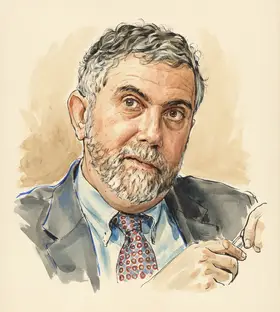
Paul Krugman on Artificial Intelligence
TL;DR
Paul Krugman views current AI as advanced large language models, historically aligning skepticism with past technological revolution impacts on employment.
Key Points
He often describes contemporary AI as an evolution of large language models, noting they are powerful but not yet what one might truly call 'intelligence'.
Paul Krugman frequently cites historical parallels, like the Luddites or the introduction of electricity, to suggest that fears of permanent mass technological unemployment are often overstated.
He is skeptical about the immediate economic payoff, noting in early 2025 that a productivity surge commensurate with the hype has not appeared in official numbers.
Summary
Paul Krugman views current Artificial Intelligence, or what he often terms large language models, as a significant technological evolution, though he questions the true definition of intelligence it represents at this point. He frequently draws parallels between the current excitement around AI and historical technological revolutions, such as the introduction of machinery or electricity, noting that fears of mass technological unemployment have historically proven unfounded, despite significant, localized dislocations. He suggests that while current applications are proving very useful, particularly in areas like translation, a commensurate productivity surge in the overall numbers is not yet evident, leading him to wonder if there is significant hype surrounding the technology's immediate economic impact.
He acknowledges the potential for AI to displace white-collar analytical jobs, which could have serious social and political implications if an educated workforce faces diminished prospects, contrasting with the potential for AI to equalize by revaluing material-world skills. However, the Nobel laureate remains cautious, observing that the immense capital requirements for leading AI models might simply reinforce existing monopolies, and he stresses the need for more actual experience and less speculation before confirming revolutionary long-term economic effects.
Frequently Asked Questions
Paul Krugman views current AI primarily as advanced large language models, capable of complex tasks but distinct from true intelligence. He generally adopts a cautious, historically informed perspective on its transformative economic impact, often comparing it to past technological shifts.
Krugman's position remains consistent in his public discourse: he acknowledges the technology is impressive and useful but maintains a skeptical economist's stance regarding claims of immediate, sweeping productivity gains and mass job destruction, based on historical precedent.
Paul Krugman suggests that while AI will likely displace certain analytical and symbolic manipulation tasks previously considered high-skilled, this is a pattern seen in all technological revolutions. He stresses that historically, new jobs emerge, although he admits the current scale of change warrants careful observation.
Sources5
Talking AI With Martin Wolf
The Wolf-Krugman Exchange: AI hype vs reality
AI, Jobs and the Budget
* This is not an exhaustive list of sources.