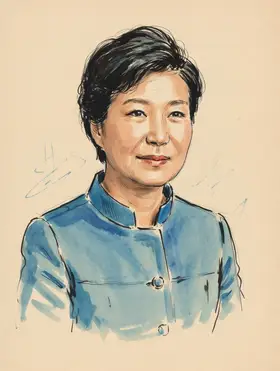
Park Geun Hye on Chaebol Reform
TL;DR
Park Geun Hye favored strengthening fair trade laws and limiting future circular investment over dramatic structural overhaul of family conglomerates.
Key Points
She announced a reform plan in November 2012 that excluded suggestions to ban existing circular equity investment in family-owned conglomerates.
She pledged to restrict all new circular equity investment to curb wealth transfer to founding families.
Park suggested strengthening punishment for corporate crimes, including jail sentences with limited pardons, as a better approach than inviting civilians as juries in trials for corporate leaders.
Summary
Park Geun Hye’s position on chaebol reform evolved during her presidential campaign, ultimately prioritizing economic revitalization over radical restructuring of the family-owned conglomerates. Initially an advocate for 'economic democratization,' she later toned down her platform, explicitly excluding drastic measures like a complete ban on circular equity investment, citing concerns over foreign hostile mergers and acquisitions and potential business sector disruption. She stressed a commitment to strengthening fair-trade regulations to ensure a fair market order, which would aid small and medium-sized enterprises and encourage entrepreneurship, framing this as the priority to overcome the economic crisis.
She ultimately favored a more moderate approach, which included restricting new circular equity investment while leaving existing structures intact, rather than enacting a separate, dedicated chaebol law. Furthermore, she pledged to introduce stricter penalties, including jail time with limited pardons for corporate leaders convicted of malfeasance, and to return unfairly gained profits. Observers noted this shift was a pivot toward her conservative base and away from more liberal economic advisors, moving the policy focus from structural democratization to general 'economic revitalization' through encouraging corporate investment.
Frequently Asked Questions
Park Geun Hye's main stance, particularly as the election neared, was to prioritize economic growth and market fairness over radical restructuring of the chaebols. She focused on strengthening existing competition laws rather than creating entirely new legislation for the conglomerates.
No, the President-elect opted against a dramatic action plan to ban existing cross-shareholding, explaining that such an action could make South Korean enterprises vulnerable to hostile mergers and acquisitions. She maintained that dramatic changes would cause too much business sector disruption.
Park Geun Hye believed that strengthening punishment for corporate crimes, including introducing stricter penalties with jail sentences and limiting presidential pardons, was the correct approach. She rejected the idea of allowing civilians to participate as juries in the trials for convicted corporate leaders.
Sources5
Park tones down on chaebol reform - The Korea Times
Park opting against radical chaebol reform - The Korea Herald
South Korea's Moment for Chaebol Reform is Now | GAB | The Global Anticorruption Blog
Blood Runs Thicker in the South Korean Economy - Stratfor
Park administration bowing to chaebol pressure on reform measures: Park administration bowing to chaebol pressure on reform measures
* This is not an exhaustive list of sources.