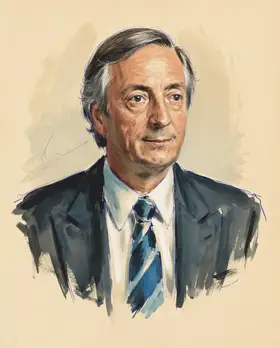
Néstor Kirchner on Carlos Menem
TL;DR
Néstor Kirchner strongly opposed the neoliberal policies of Carlos Menem, campaigning to dismantle that legacy.
Key Points
He built his political platform on rejecting the neoliberal economic model implemented by Menem during the 1990s.
His victory in the May 2003 presidential election was secured after his opponent, Carlos Menem, withdrew from the second round.
Kirchner’s administration faced pressure to address corruption and economic failings linked directly to the tenure of the former president.
Summary
Néstor Kirchner's political stance on Carlos Menem was one of firm and vocal opposition, primarily directed at the neoliberal economic model implemented during the former president's administration from 1989 to 1999. Kirchner, identifying as a progressive Peronist, framed his own political ascent and the subsequent Kirchnerist movement as a direct repudiation of Menem’s era, which he often associated with high levels of unemployment and a dismantling of the state's role in the economy. His successful 2003 presidential bid was significantly aided by the withdrawal of Menem from the runoff election, allowing Kirchner to win on a platform promising to reverse the social and economic damage attributed to the previous decade.
This confrontation with the legacy of the 1990s served as a central theme for Kirchner’s governance, positioning him as the restorer of state sovereignty and social inclusion against the perceived excesses of privatization and deregulation championed by his predecessor. The need to confront the era's corruption and dismantle the structural adjustment policies became a defining characteristic of his presidency, often leading to public condemnations of the policies and figures associated with the Menem years as he sought to construct a new political and economic framework for Argentina.
Key Quotes
"Menem has shown his last face, the face of a coward"
"Yesterday we experienced one of the vilest and most shameful days of living memory; an entire country and its democratic institutions, check-mated. This is not the first time events of this nature occur in our country."
Frequently Asked Questions
Néstor Kirchner held a position of strong opposition to Carlos Menem, primarily due to the neoliberal economic policies enacted under the latter’s presidency. He viewed Menem's era as one that caused significant social and economic damage to Argentina, according to analysis of his political rise. Kirchner campaigned explicitly on reversing these policies once he took office in 2003.
Néstor Kirchner’s fundamental stance against the Menem administration's policies remained consistently negative throughout his political career, as sources indicate. His early political identity was forged in opposition to the 1990s consensus that Menem embodied. Therefore, his position did not appear to evolve from one of strong criticism.
Upon taking the Argentine presidency, Néstor Kirchner signaled his intention to break sharply with the past, according to contemporary reports. He was expected to tackle corruption linked to the previous government and shift economic policy away from privatization. His victory itself was seen as a definitive political rejection of the legacy of the former president.
Sources9
Kirchner Confronts the Challenge of Constructing a New ...
Néstor Kirchner
Kirchner's Task: Abandon Demagoguery and Face Facts
Kirchner pressured to tackle Menem-era corruption
Kirchner Takes Argentine Presidency as Menem Drops Out
Don't cry for Menem
Menem's withdrawal and the Future of Argentina
Menem's imprint on Argentine democracy
Menem bows out of race for top job | World news
* This is not an exhaustive list of sources.