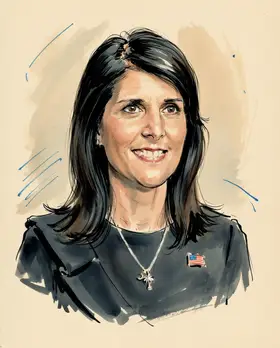
Nikki Haley on India Pakistan Relations
TL;DR
Nikki Haley generally aligns with the established US policy of encouraging bilateral talks while firmly opposing direct third-party mediation.
Key Points
She suggested the US should encourage bilateral talks rather than actively mediating disputes between India and Pakistan.
Her past statements align with India's official diplomatic position that third-party mediation is unnecessary in India-Pakistan matters.
Following a specific terror incident, she made remarks that were noted by the Ministry of External Affairs regarding the bilateral nature of the relationship.
Summary
Nikki Haley's stated position regarding India Pakistan Relations generally supports the established American stance of encouraging direct, bilateral dialogue between the two South Asian nations. During her tenure and campaigns, she indicated that the United States should not actively mediate or insert itself as a primary third-party resolver in disputes such as the Kashmir issue. This approach mirrors the long-standing policy preference of New Delhi, which consistently maintains that all issues with Pakistan should be resolved bilaterally, without external involvement. Her comments often emphasized respecting the established diplomatic frameworks, suggesting that a direct engagement between the leaders of India and Pakistan is the appropriate avenue for de-escalation and resolution.
This position has implications for how the US engages with the region, especially during periods of heightened tension, such as after cross-border terror incidents. While supporting India's security concerns, the former UN Ambassador's rhetoric reflected a reluctance to pursue the kind of high-profile mediation that previous administrations had sometimes suggested was a path to peace. Experts noted that Haley's stance, echoing the official Indian government line, signals a cautious diplomatic posture aimed at avoiding policies that could be perceived by India as undermining its sovereignty or bilateral framework.
Frequently Asked Questions
Nikki Haley's position generally supports the established US policy of encouraging direct bilateral talks between India and Pakistan. She has indicated that the United States should refrain from actively inserting itself as a primary third-party mediator in their disputes. This stance aligns with India's long-held preference for only bilateral engagement.
While Haley has sometimes framed potential US involvement, her core stance has been against direct, active mediation by the US government. Her comments often leaned toward supporting the bilateral framework, which led to reactions from India's Ministry of External Affairs about the limits of third-party involvement.
Nikki Haley signaled that the role of the United States should be to encourage dialogue between the two nations rather than becoming an active arbiter. This approach respects the idea that the core issues must be addressed directly by the governments of India and Pakistan themselves.
Sources10
US: Nikki Haley on Pahalgam attack, India-Pakistan conflict, Operation Sindoor
Why Nikki Haley’s remarks on India-Pakistan cannot be ignored
MEA reacts to Nikki Haley's offer, says India's stand on bilater... | HuffPost India
Why India does not want the United States to mediate in India-Pakistan parley
Donald Trump may mediate in India-Pakistan conflict issues: Nikki Haley
No third party mediation needed in India-Pakistan relations, say foreign policy experts on Nikki Haley comments
United States-India-Pakistan dynamics in the Trump era
Trump may get involved in Indo-Pak peace process: Nikki Haley
India's stand on bilateral talks with Pakistan remains unchanged: MEA reacts to Nikki Haley's offer
India-Pakistan relations, Kashmir dispute: What the US, Donald Trump, Nikki Haley have said
* This is not an exhaustive list of sources.