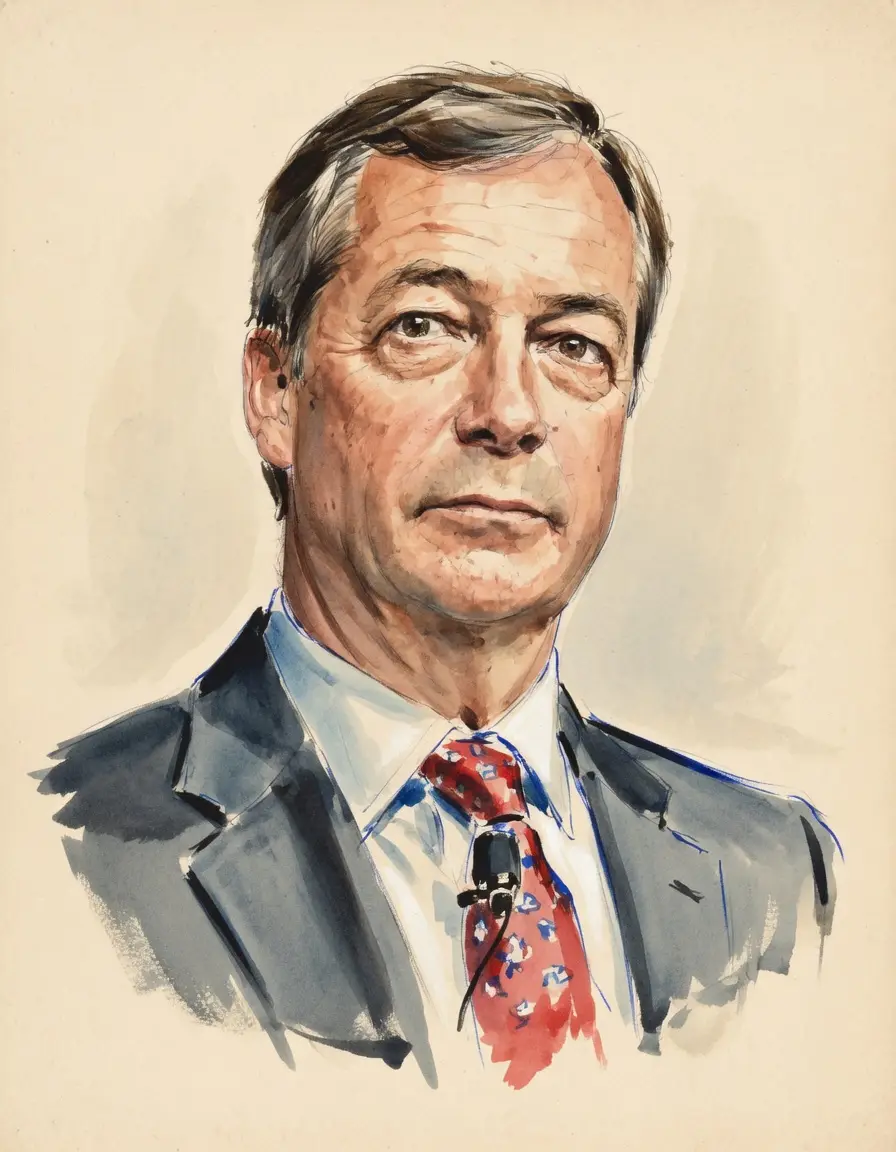
Nigel Farage on Defence Spending
TL;DR
Nigel Farage's Reform UK has pledged to significantly increase the UK's defence budget, targeting 2.5% of GDP initially.
Key Points
Reform UK pledged to increase defence spending to 2.5% of GDP within three years of taking power.
The party further aims for defence spending to reach 3% of GDP over the subsequent three parliaments.
This policy is positioned as a response to the changed European security environment following Russia's invasion of Ukraine.
Summary
Nigel Farage's Reform UK has made a clear commitment to substantially raise the United Kingdom's defence spending. The party has explicitly pledged to increase the budget to 2.5% of Gross Domestic Product (GDP) within three years of taking power, with an aim to reach 3% in subsequent parliaments. This stance is framed within the context of the changed European security environment following the invasion of Ukraine and aligns with growing pressure from NATO allies for member states to meet or exceed the 2% spending benchmark.
This proposed fiscal commitment to the armed forces is presented as a priority area for spending, alongside commitments like cutting net zero targets and reducing regulation. Such an increase in the defence budget would have direct implications for the UK defence sector, potentially benefiting major contractors. However, the proposed spending rise is set against a wider platform of significant tax cuts and spending reductions elsewhere, which have led some analysts to question the overall fiscal credibility of the plan.
Key Quotes
better, more secure place
Frequently Asked Questions
Nigel Farage, through his party Reform UK, strongly advocates for increased defence spending. He supports a commitment to raise the budget to at least 2.5% of GDP in the near term. This stance is linked to his view on the current global security situation.
The primary, stated commitment regarding defence spending appears consistent with the party's manifesto, aiming for a significant uplift to 2.5% of GDP and beyond. His general focus on national sovereignty and reduced international entanglements has remained steady.
While discussing foreign policy, Farage's party reaffirmed its commitment to significantly increase the UK's defence budget. This commitment is presented as necessary given current geopolitical realities, such as the conflict in Ukraine and potential US shifts in European security.