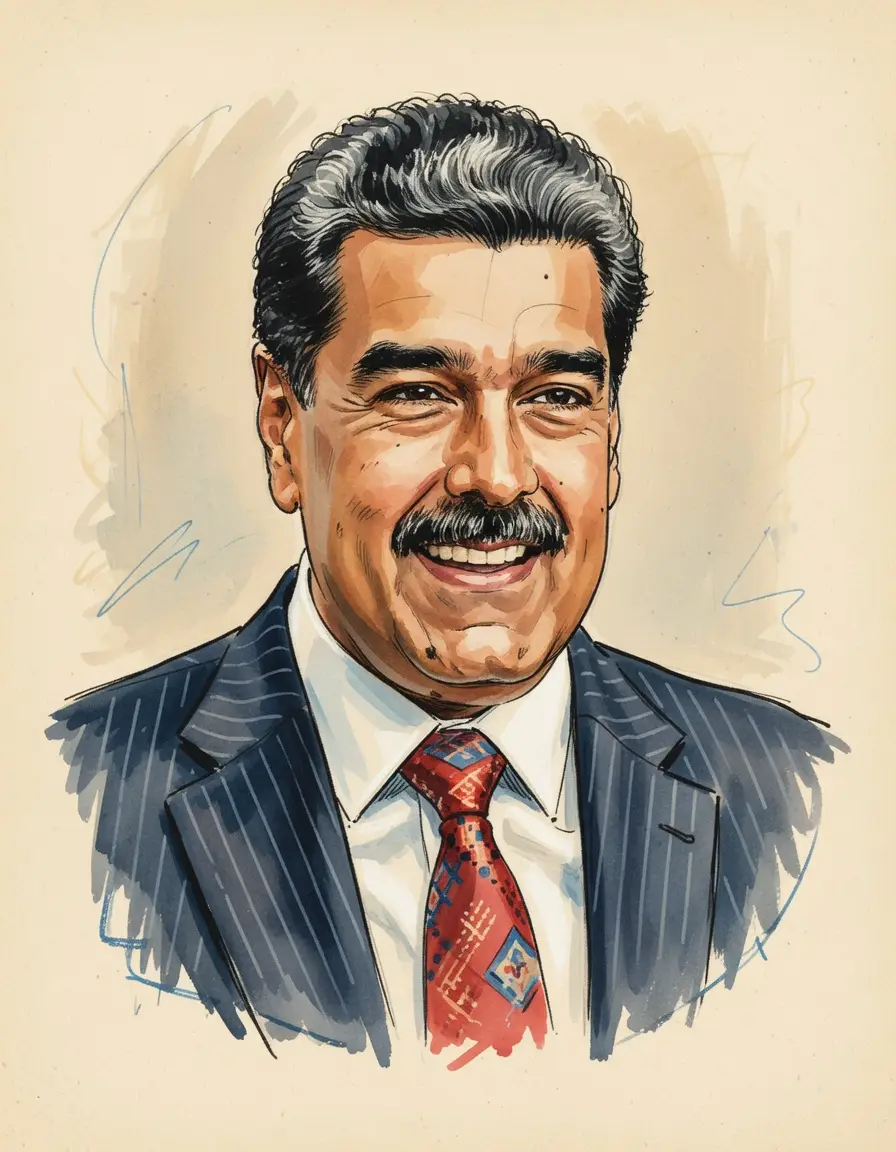
Nicolás Maduro on Rise to Power
TL;DR
Nicolás Maduro rose to power as the handpicked successor of his mentor, consolidating it through authoritarian means.
Key Points
He became active in politics through union activism and ideological training in Cuba, eventually joining the ruling party's inner circle.
Maduro narrowly won the presidency in April 2013 after being designated the successor to the late leader by the outgoing president.
His initial legitimacy was bolstered by claiming the spirit of his predecessor appeared to him as a songbird shortly after the leader's death.
Summary
Nicolás Maduro’s rise to power officially began in December 2012 when the sitting president anointed him as his political successor shortly before undergoing cancer treatment. Following the death of his predecessor in 2013, Maduro narrowly won the subsequent special election, inheriting firm control over key state institutions that had already been reshaped. Lacking the same charisma as the former leader, he consolidated his hold by continuing authoritarian practices, aggressively crushing domestic dissent, and fostering alliances with the military and other elites.
His continued grip, despite severe economic collapse and international condemnation of elections, has been maintained through escalating repressive measures. The regime has transitioned from a semi-authoritarian structure to a full-blown authoritarian one, using tactics like manipulating elections and subordinating the judiciary to eliminate threats. Externally, he successfully framed his government’s struggles and his retention of power as resistance against imperialist plots orchestrated by foreign powers, which helped rally his base.
Frequently Asked Questions
Nicolás Maduro rose to power after the death of his predecessor in 2013, having been handpicked as the political successor late in 2012. He then secured a narrow victory in the special election that followed, inheriting the mantle of the revolution. His path was forged through years of loyalty within the ruling party and leadership roles like Vice President.
While he won a narrow election in 2013 following his predecessor’s death, he has been characterized as a populist leader struggling without genuine popularity. Subsequent elections have been widely condemned as fraudulent by international observers and the opposition, raising questions about the democratic legitimacy of his continued rule. He consolidated power through non-electoral means as support waned.
Hugo Chavez played the defining role, as he anointed Nicolás Maduro as his political successor in a televised address before his death in 2013. Maduro relied heavily on his predecessor's political capital and legacy, frequently invoking Chávez’s memory to secure support among the ruling party's base.
Sources5
The rise and fall of Nicolás Maduro, Venezuela's dictator | MoneyWeek
Who is Nicolas Maduro? Bus driver turned president led Venezuela with a heavy hand | The Times of Israel
Who is Nicolas Maduro? | Nicolas Maduro News | Al Jazeera
Nicolas Maduro: A populist without popularity - ECPS
A Question of Staying Power: Is the Maduro Regime's Repression Sustainable?
* This is not an exhaustive list of sources.