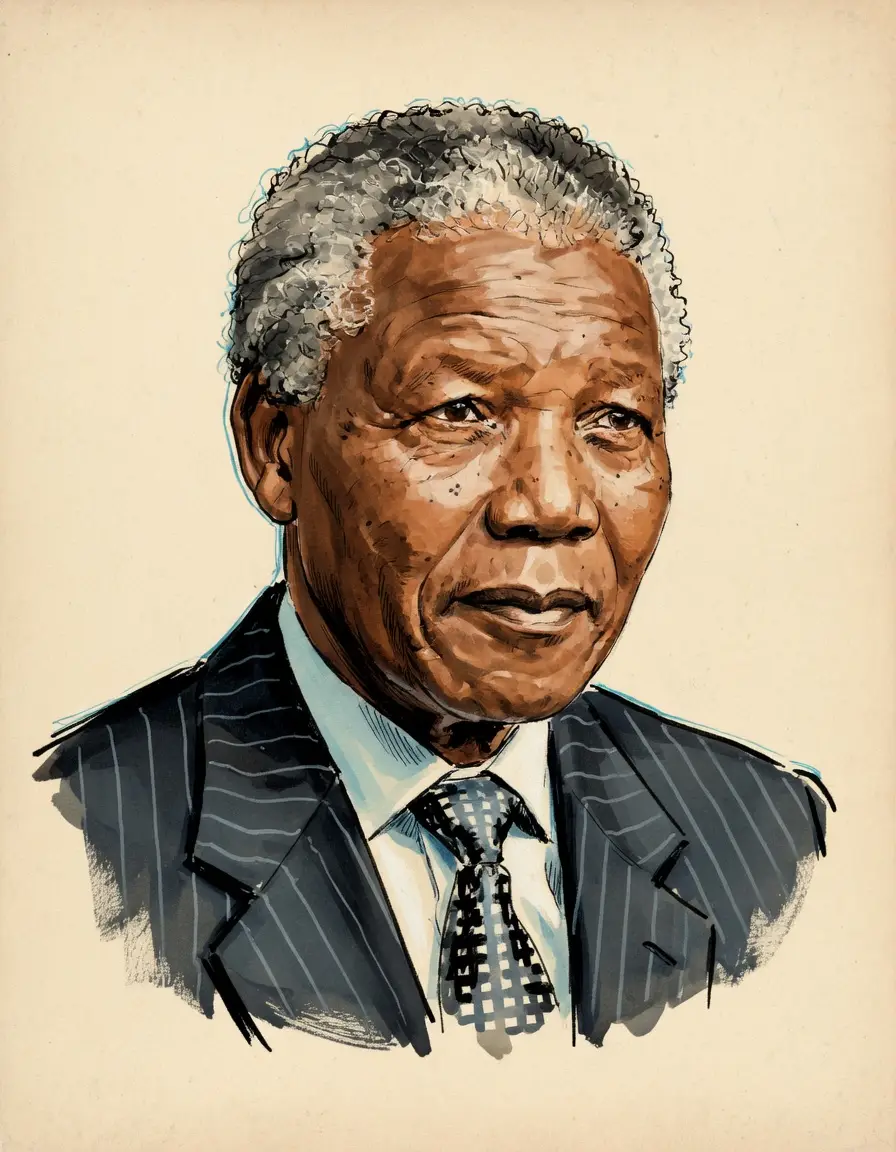
Nelson Mandela on Resistance
TL;DR
Nelson Mandela initially favored non-violent resistance but adopted armed struggle when peaceful avenues were exhausted.
Key Points
He co-founded Umkhonto we Sizwe in 1961, deciding on armed struggle only after fifty years of non-violence yielded only increased repression.
He stated at his 1964 trial that sabotage was chosen as the initial form of violence because it did not involve loss of life, offering the best hope for future race relations.
He maintained that the ultimate goal remained a democratic and free society, an ideal for which he was prepared to die, whether through peaceful or forceful means.
Summary
Nelson Mandela viewed resistance as a pragmatic, evolving strategy against the South African state's escalating oppression. Initially, the African National Congress (ANC) adhered to strict non-violence, a tradition he upheld during the Defiance Campaign, which involved peaceful, unlawful demonstrations against apartheid legislation. However, following events like the Sharpeville Massacre in 1960 and the Government's show of force, he concluded that peaceful methods had proven ineffective against tyranny. This realization prompted him to co-found Umkhonto we Sizwe (MK) to undertake planned sabotage as a response to violence being met with force.
He clarified that this shift to armed struggle was not a rejection of his ideal for a democratic, non-racial society, but a calculated last resort, maintaining that terrorism and civil war were to be avoided. His stance on non-violent passive resistance acknowledged its effectiveness only if the opposition reciprocated, stating that its efficacy ends when met with violence. Even while involved with MK, he maintained the ANC's goal remained the achievement of full political rights based on the Freedom Charter, welcoming assistance from diverse groups, including communists, who shared the immediate goal of dismantling white supremacy.
Frequently Asked Questions
Nelson Mandela's initial position, rooted in the ANC tradition, heavily favored constitutional struggle and non-violent protest, exemplified by his leadership in the Defiance Campaign. He believed African grievances could be settled through peaceful discussion for many decades.
Yes, his approach evolved significantly when he concluded that peaceful protest had failed to move the government. He subsequently co-founded Umkhonto we Sizwe and supported sabotage as a necessary tactic when all other lawful modes of opposition were closed.
He asserted that non-violent passive resistance is only effective if the opposition follows the same rules; its efficacy ends when met with state violence. He saw armed struggle as an inevitable necessity, not a preference, adopted only after peaceful channels were exhausted.
Sources6
Nelson Mandela: The Symbol of Resistance – ANC
Nonviolent passive resistance is effective as long as your opposition adheres to the same rules as you do.
"I Am Prepared to Die" (Nelson Mandela's Statement at the Rivonia Trial in 1964)
Nelson Mandela's support for Armed Struggle – Only a Northern Song
15 Quotes by Nelson Mandela | History Hit
5 quotes from Nelson Mandela that inspire young activists worldwide
* This is not an exhaustive list of sources.