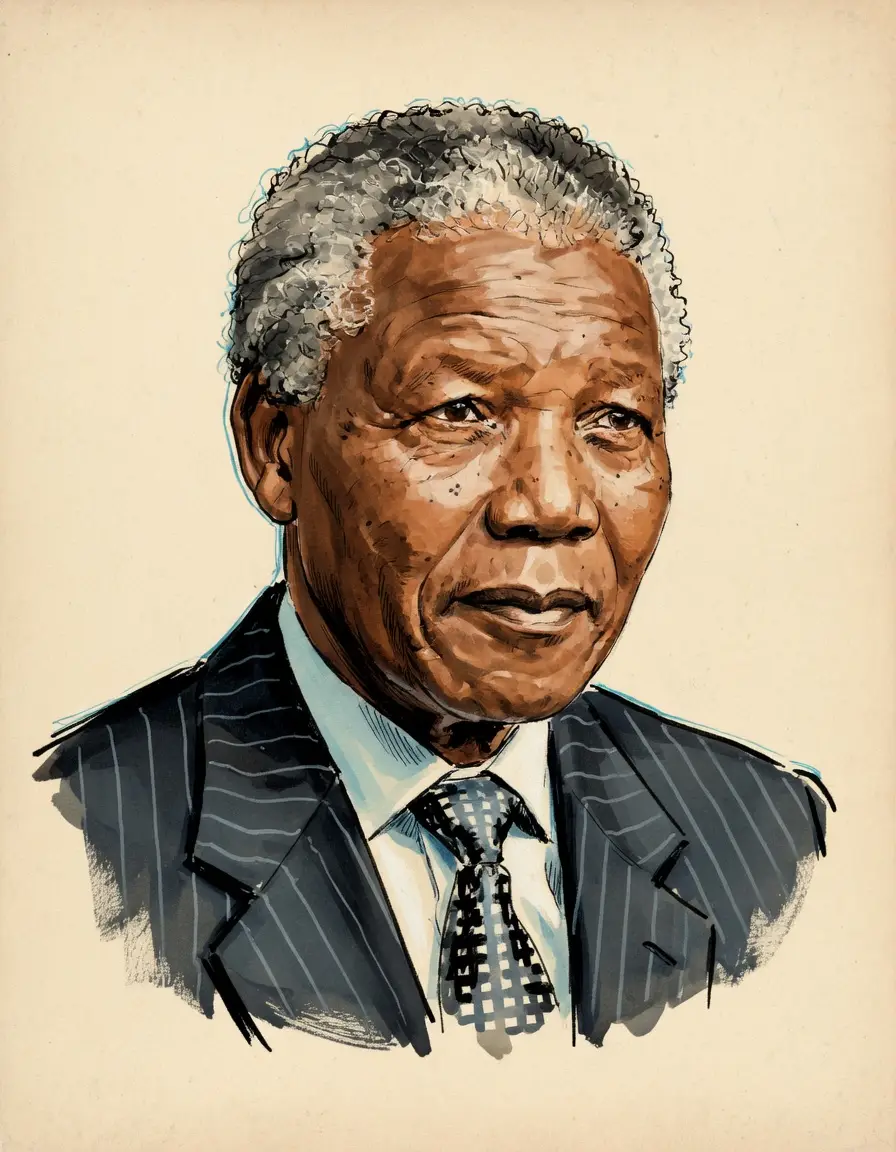
Nelson Mandela on Prison
TL;DR
Nelson Mandela viewed his long imprisonment as a crucial period for internal development and profoundly advocated for humane treatment of all prisoners.
Key Points
He spent a total of over 27 years in prison, serving time in facilities including Pretoria Local Prison, Robben Island, Pollsmoor Prison, and Victor Verster Prison.
Mandela rejected an offer of release from President P.W. Botha in February 1985 because it required him and other political prisoners to renounce violence.
The United Nations Standard Minimum Rules for the Treatment of Prisoners were unanimously adopted in December 2015 and renamed in his honor to promote humane imprisonment conditions.
Summary
Nelson Mandela’s position on prison is deeply informed by his 27 years of incarceration, primarily on Robben Island and later in other facilities. He often framed this extensive time not merely as a loss of freedom, but as a forcing mechanism for profound self-examination and personal development, allowing him to focus on internal accomplishments like honesty, humility, and generosity, rather than external successes. He felt that this period of intense isolation, particularly solitary confinement, was the most forbidding aspect of prison life, where one begins to question reality.
Following his release, his perspective informed his global advocacy for penal reform, notably his involvement in establishing international standards for the treatment of inmates. The United Nations Standard Minimum Rules for the Treatment of Prisoners were renamed the "Nelson Mandela Rules" to honor his legacy, emphasizing humane conditions, raising awareness that prisoners are part of society, and valuing prison staff as a social service. He contended that a nation’s character is judged by how it treats its lowest citizens, which includes those in jail. [cite: 3, cite: 5]
Frequently Asked Questions
Nelson Mandela strongly advocated for fair and humane treatment for all prisoners, reflecting his own experiences. This view was formalized globally through the adoption of the 'Nelson Mandela Rules' by the UN General Assembly, which set benchmarks for minimum prison conditions.
Yes, Nelson Mandela described his time in prison as an ideal place to know himself, focusing on internal accomplishments like humility and sincerity. He stated that prison was a tremendous education in patience and perseverance, ultimately making him a more informed, less aggressive leader.
Mandela was resolute about overcoming bitterness and hatred before his release, stating that he would still be imprisoned mentally if he carried those feelings out the door. His mission upon release included liberating both the oppressed and the oppressor.
Sources7
What Nelson Mandela Learned About Leadership in Prison
Mandela in Solitary
The Nelson Mandela Rules
Nelson Mandela Rules
A Nelson Mandela Quote for Every Year He Spent in Prison
Trials and prisons chronology – Nelson Mandela Foundation
Nelson Mandela Quotes About Prisons
* This is not an exhaustive list of sources.