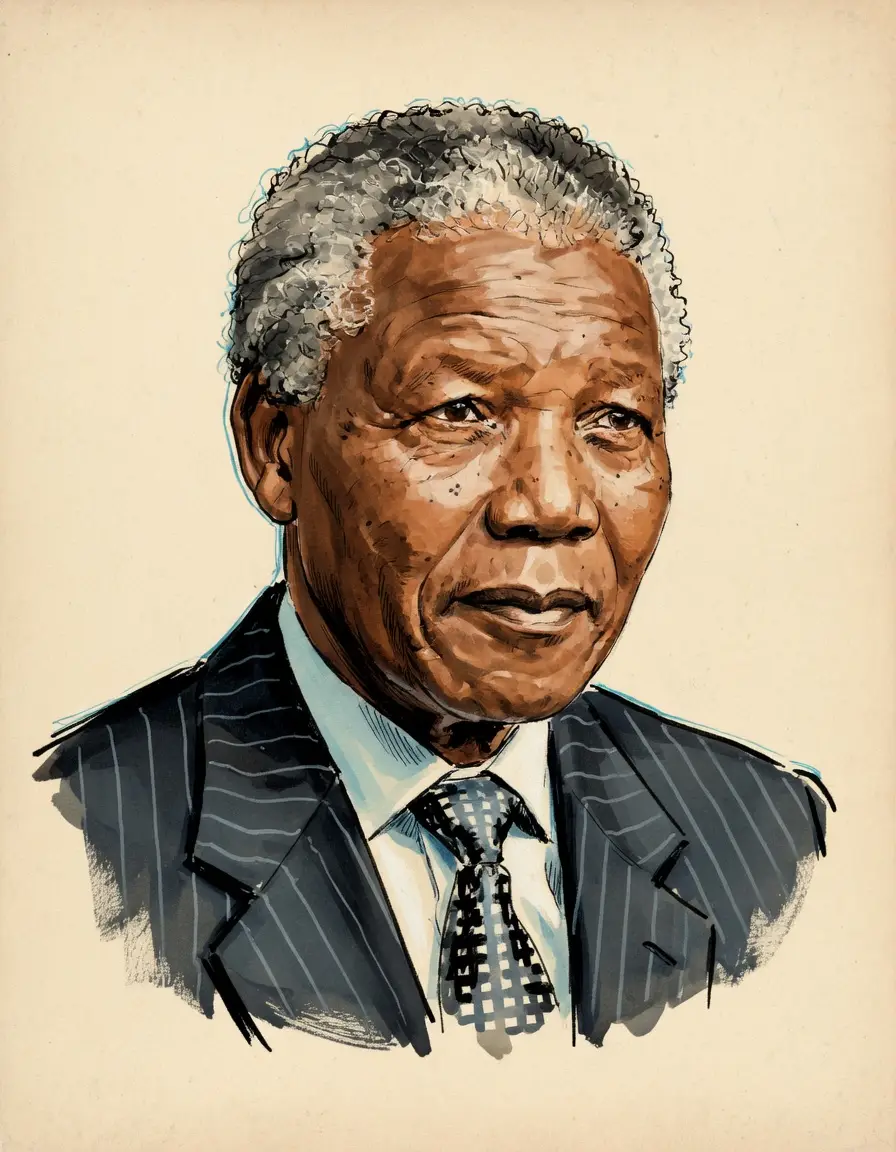
Nelson Mandela on Poverty
TL;DR
Nelson Mandela viewed poverty as a man-made social evil that must be eradicated through justice, not charity.
Key Points
He framed poverty alongside slavery and apartheid as a social evil in his February 2005 speech.
Overcoming poverty is viewed as the protection of a fundamental human right, not merely a gesture of charity.
His prescription for ending global poverty included ensuring trade justice, ending the debt crisis, and increasing aid quality.
Summary
Nelson Mandela asserted that poverty, alongside slavery and apartheid, constitutes a major social evil of the current age, especially given the world's immense scientific and wealth advances. He strongly maintained that poverty is not a natural state but is man-made and thus entirely within the power of human beings to overcome and eradicate. For the former South African president, tackling poverty was fundamentally an act of justice and a protection of the basic human right to dignity and a decent life, arguing that true freedom cannot exist while poverty persists.
His position involved specific calls to action for developed nations, emphasizing the need for trade justice, an end to the debt crisis for the poorest countries, and the delivery of high-quality aid. He made these urgent appeals while encouraging international movements to hold world leaders accountable to their promises, such as those made in the Millennium Declaration to halve extreme poverty. He entrusted the youth to carry the torch forward, asking them to act with courage and vision.
Key Quotes
Massive poverty and obscene inequality are such terrible scourges of our times - times in which the world boasts breathtaking advances in science, technology, industry and wealth accumulation - that they have to rank alongside slavery and apartheid as social evils.
Frequently Asked Questions
Nelson Mandela held a strong position against poverty, viewing it as a man-made social evil comparable to slavery and apartheid. He believed overcoming it was a matter of fundamental human rights and justice, not charity.
No, he explicitly stated that poverty is not natural; rather, he argued that it is man-made. Therefore, he insisted that it can and must be overcome through deliberate human actions.
Mandela called for concrete action from developed nations, including trade justice and debt relief for poorer countries. He urged the world to act with courage and vision to set people free from the 'prison of poverty.'
Sources7
10 Times Nelson Mandela Was Spot On About Ending Extreme Poverty
Nelson Mandela Day Quotes
Address by Nelson Mandela for the "Make Poverty History" Campaign, London - United Kingdom
Nelson Mandela - Stanford Center on Poverty and Inequality
23 Inspiring Nelson Mandela Quotes About Fighting Injustice
“Like slavery and apartheid, poverty is not natural. It is man-made and it can be overcome and eradicated by the action of human beings.” -Nelson Mandela : r/quotes
Nelson Mandela at the United Nations
* This is not an exhaustive list of sources.