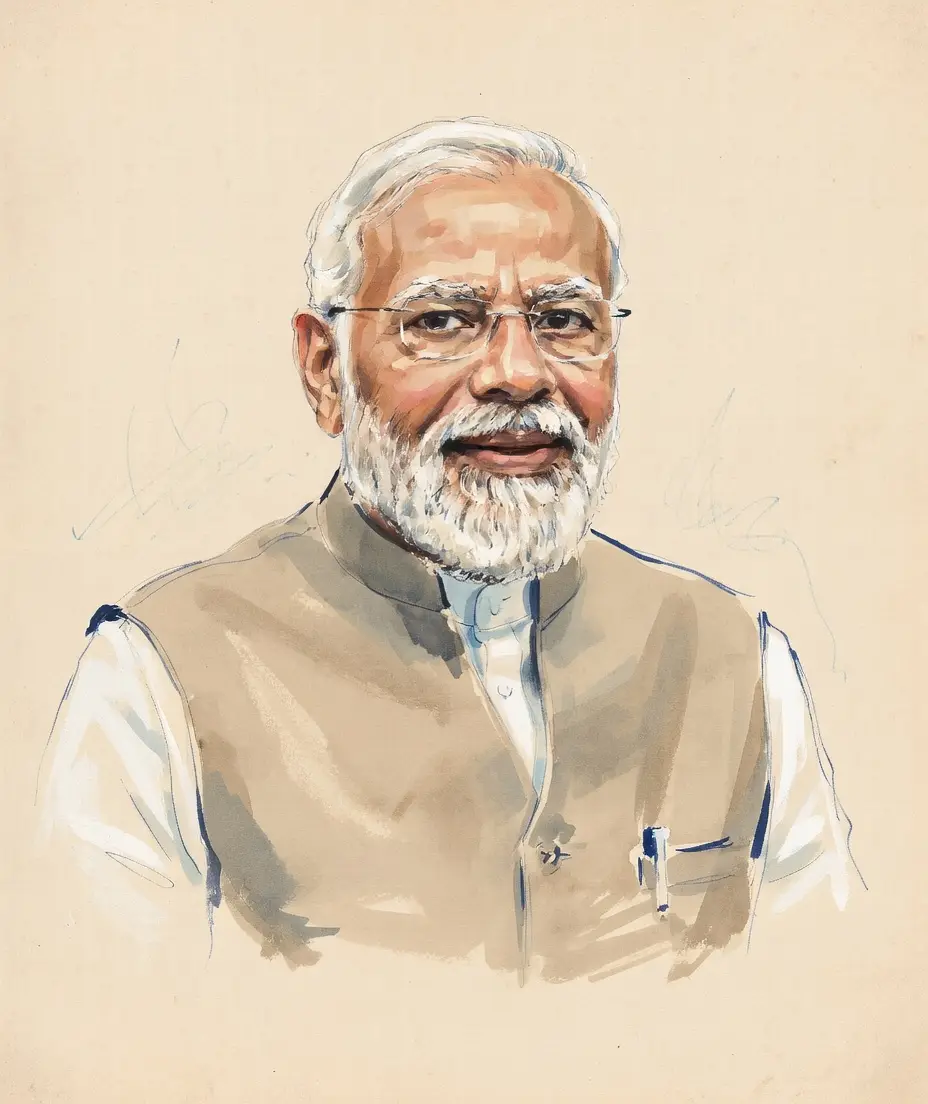
Narendra Modi on Kashmir
TL;DR
Narendra Modi's firm position centers on fully integrating Kashmir by revoking its special status and ensuring absolute security.
Key Points
He presided over the 5 August 2019 revocation of Article 370, ending Jammu and Kashmir's special status and splitting the state into two Union Territories.
Following a civilian massacre in April 2025, he vowed that India would pursue the attackers and their handlers "to the ends of the Earth".
The government's approach to post-attack responses has been condemned for elements of collective punishment and a highly securitized doctrine in the region.
Summary
Narendra Modi's core position on Jammu and Kashmir has been defined by the 5 August 2019 revocation of its special status under Article 370, which stripped the region of its semi-autonomy and reorganized it into federal union territories. This decisive action, supported by his Hindu-nationalist government, was publicly justified as a necessary step to integrate the territory completely with the rest of India, promoting development and ending perceived social and economic injustice. Following subsequent attacks in the region, his stance has been marked by a vow to pursue perpetrators and their handlers to the ends of the Earth and to reduce the land they control to dust.
The context of this position involves a strong emphasis on national security, with actions following attacks often including significant security crackdowns and condemnation of violence. Analysts suggest this strong stance is shaped by intense domestic political pressure to project strength on security matters. Furthermore, there are suggestions that the government has embraced security and administrative models that involve intense securitization and population management in Indian-administered Kashmir. While the Supreme Court upheld the revocation in 2023, simmering local discontent remains a key factor in the ongoing security dynamics in the region.
Key Quotes
...reduce to dust whatever little land these terrorists have
Frequently Asked Questions
Narendra Modi's main position is one of full integration of Jammu and Kashmir into the Indian Union, as demonstrated by the abrogation of Article 370 in 2019. He views this as correcting a historical constitutional anomaly and enabling full development for the region. He consistently emphasizes the need for robust security to counter terrorism emanating from the region.
After the deadly attack in April 2025, Prime Minister Modi made strong public statements vowing that perpetrators would be pursued relentlessly. He declared that India would 'pursue the attackers and their handlers to the ends of the Earth.' This was coupled with an acknowledgment of domestic fury demanding a strong response.
The fundamental position of integrating the region was a long-standing goal of his party, making the 2019 revocation the culmination of a pre-existing ideological stance. However, the response to external security challenges, particularly after major attacks, is continually shaped by the need to balance domestic nationalist expectations with the risks of escalation.
Sources8
Kashmir, spying, demolitions: How Modi's India embraced 'Israel model'
Tweet by Narendra Modi
Revocation of the special status of Jammu and Kashmir - Wikipedia
Modi's post-Kashmir attack crackdown condemned as collective punishment
BBC News - Articles
India will pursue perpetrators of Kashmir attack 'to the ends of the earth,' Modi says
The domestic pressures shaping India's response to Kashmir attacks
Frontline - Article
* This is not an exhaustive list of sources.