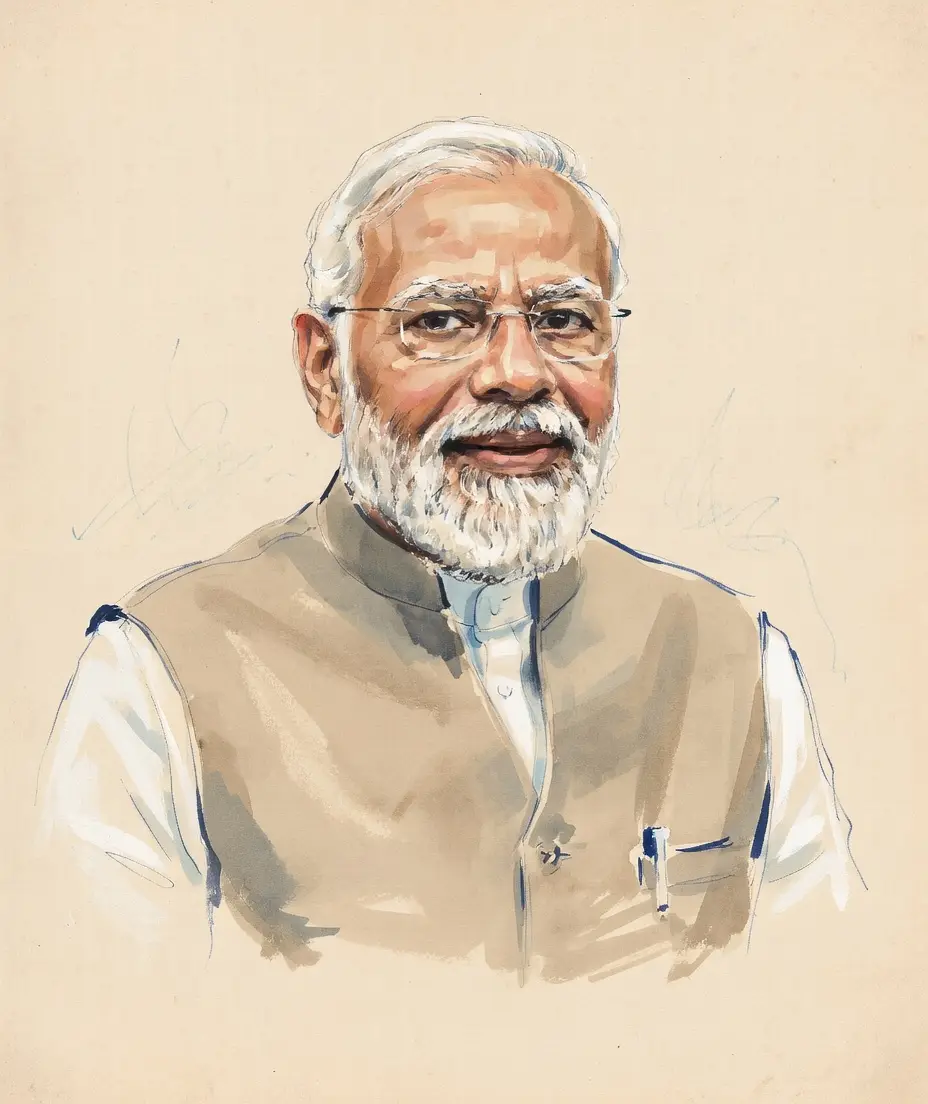
Narendra Modi on Health
TL;DR
Narendra Modi strongly advocates for 'Health for All' through integrated systems, prioritizing holistic wellness and traditional medicine alongside modern care.
Key Points
He addressed the 78th Session of the World Health Assembly in Geneva on May 20, 2025.
He emphasized the role of traditional medicine in restoring health balance during a WHO summit.
He noted that World Mental Health Day serves as a reminder that mental health is a fundamental part of overall well-being.
Summary
Narendra Modi's core position on health centers on the principle of 'Health for All,' aiming to create accessible and comprehensive healthcare systems across India. He emphasizes an integrated approach that combines modern medical facilities with the promotion of traditional Indian systems of medicine, such as Ayurveda, for holistic well-being. This stance is evidenced by initiatives focusing on expanding primary healthcare infrastructure, launching national health schemes, and actively promoting wellness and lifestyle changes as preventative health measures.
His approach has evolved to increasingly integrate global health perspectives, particularly stressing the role of wellness and traditional healing methods on international platforms like the WHO. He often frames health not just as the absence of disease but as a fundamental component of overall national well-being, linking it to mental health awareness and physical fitness. Furthermore, the focus extends to ensuring that health initiatives are inclusive, reaching all segments of the population through various government programs.
Key Quotes
"The health of the world depends on how well we care for the most vulnerable"
Frequently Asked Questions
Narendra Modi holds a strong, positive position on health, primarily advocating for universal access summarized as 'Health for All.' He champions an integrated approach combining modern medicine with traditional systems like Ayurveda for holistic care.
His core commitment to universal healthcare access appears consistent, but the focus has evolved over time. More recently, he has increasingly integrated global wellness perspectives and stressed the importance of mental health alongside physical well-being.
He has explicitly emphasized the role of traditional medicine, such as Ayurveda, in a WHO context for restoring health balance. For him, these systems form an integral part of a comprehensive national health strategy.
Sources9
PM Modi Emphasise The Role Of Traditional Medicine In Restoring Health Balance At WHO Summit
World Mental Health Day serves as a powerful reminder that mental health is a fundamental part of our overall well-being: PM
Health for All - Putting PM Modi’s Vision into Action
Prime Minister Shri Narendra Modi addresses the 78th Session of the World Health Assembly in Geneva
PM Narendra Modi's message on Global Wellness:Holistic health and wellness can help in achieving larger public health goals
Health for all: PM Modi in his address to the 77th World Health Assembly
PM Modi's message on Global Wellness
I eat 2kg of 'gaalis' daily in light moment during RS speech; PM Modi reveals health secret
PM Narendra Modi's Tweet on World Mental Health Day
* This is not an exhaustive list of sources.