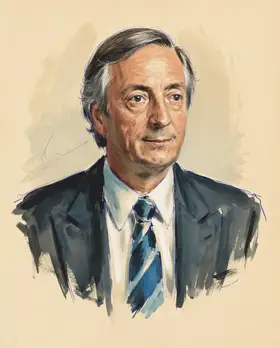
Néstor Kirchner on United States
TL;DR
Néstor Kirchner sought a relationship of candid dialogue, avoiding the automatic alignment with the United States seen in the previous decade.
Key Points
He opposed the Free Trade Area of the Americas, favoring proportional representation for Mercosur over the U.S.-backed majority rule system, as seen in 2005.
He refused a meeting with U.S. Secretary of Defense Donald Rumsfeld during his presidency, signaling a shift from the close alignment of the 1990s.
Argentina, under his guidance, supported Bolivia against a challenge backed by the right and refused to allow Honduras back into the OAS despite U.S. lobbying.
Summary
Néstor Kirchner adopted a pragmatic foreign policy that marked a departure from the automatic alignment with the United States characteristic of the 1990s. His administration preferred a relationship characterized as 'cooperation without cohabitation' when dealing with the U.S. president, engaging in candid dialogue even when holding differing views on policy, such as the proposed Free Trade Area of the Americas (FTAA). He strongly opposed the FTAA, preferring a system that would grant more influence to the Mercosur bloc, which contributed to the negotiations stalling after the 4th Summit of the Americas in Mar del Plata. While he stated opposition to the war on terror, he did not support the war itself and notably refused to meet with the U.S. Secretary of Defense, Donald Rumsfeld. His foreign policy emphasis shifted toward strengthening integration with other Latin American countries, especially Brazil and Venezuela, to achieve regional strategic autonomy, sometimes putting him at odds with Washington's influence.
This recalibration signaled a move away from the closeness of the preceding era, which was sometimes described as 'carnal relations.' The independent stance was further evidenced by Argentina, under his leadership, refusing to allow Honduras back into the OAS following a coup that received U.S. backing. His success in defying the International Monetary Fund was seen by some as contributing to the demise of U.S. influence, particularly over recently independent South American nations. Despite moments of alignment, like sending health specialists to aid after Hurricanes Katrina and Rita, the overall trajectory under Kirchner was one of asserting Argentine sovereignty against perceived U.S. pressure.
Key Quotes
We have considered issues related to our bilateral relations between Argentina and the U.S.
Mercosur is going to be in a very strong position to negotiate agreements and tariffs …. This [fact] is not in the interest of the United States.”
Frequently Asked Questions
Néstor Kirchner's stance on the United States was pragmatic, seeking a relationship of candid dialogue rather than automatic alignment, as told by his Chancellor. During his time, Argentina ceased the 'carnal relations' of the 1990s in favor of a 'cooperation without cohabitation' dynamic. This mixed sentiment was reflected in his opposition to U.S. trade initiatives while cooperating on specific issues like sending aid after Hurricane Katrina in 2005.
Yes, Néstor Kirchner worked to change the relationship by moving away from the automatic alignment with the United States seen in the previous decade. His administration actively worked to consolidate Latin American independence, which contributed to a perceived loss of U.S. influence in the region, according to a 2010 analysis. While he engaged in high-level meetings, such as one with President Bush in 2005, he often expressed dissent on key policy areas like trade.
Néstor Kirchner told the United Nations that he opposed terrorism but did not support the 'war on terror' as it was being conducted. This position, along with refusing to meet with the U.S. Secretary of Defense, demonstrated his desire to maintain an independent foreign policy. He focused instead on strengthening regional blocs like Mercosur to negotiate with international powers.
Sources5
Remarks Following Discussions With President Nestor Kirchner of Argentina in Mar del Plata, Argentina
Néstor Kirchner - Wikipedia
Néstor Kirchner: Argentina's independence hero
President to Welcome Nestor Kirchner of Argentina
Cristina and the U.S: No Change
* This is not an exhaustive list of sources.