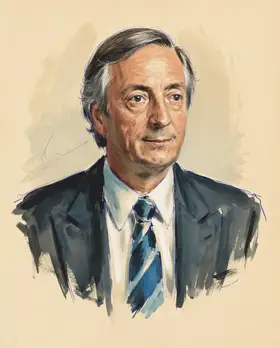
Néstor Kirchner on La Cámpora
TL;DR
Néstor Kirchner supported the founding of La Cámpora to back his political project and his wife's subsequent administration.
Key Points
The organization was established in 2006 by his son to support the political process beginning with him.
It extended support to the government during the 2008 agricultural sector conflict to counter opposing demonstrations.
After his death in 2010, the organization became a key faction struggling for power within the administration.
Summary
Néstor Kirchner was central to the political environment that led to the establishment of La Cámpora in 2006, which was named after former Peronist president Héctor José Cámpora. The organization was created specifically to support his political process, extending that backing to his wife's government during the 2008 conflict with the agricultural sector to counter opposition demonstrations. The group utilized new technologies, such as social networks, to confront media conglomerates that were perceived as attempting to undermine the Kirchner administration's changes.
Following the death of Néstor Kirchner in 2010, La Cámpora rapidly evolved to become one of the key factions vying for power within the subsequent administration, alongside the labor unions and the traditional Justicialist Party structure. During this period, the current president was seen instructing that candidates lists for provincial legislators include members of the group. Key members of La Cámpora subsequently moved into prominent government and industry roles, signaling the organization's significant influence on the political and economic landscape.
Key Quotes
“Never again,”
Frequently Asked Questions
Néstor Kirchner was politically central to the environment that led to the group's establishment in 2006, as it was created to support his political project. The organization was named after former Peronist president Héctor José Cámpora. He directed support for the youth movement which gained prominence during his presidency.
Yes, Néstor Kirchner's political process was the initial driving force for the creation of the youth organization. He supported its initial methodology of confronting opposing discourse through new technologies. His support was evident in the very purpose for which the group was founded.
After the death of Néstor Kirchner in 2010, the organization became a significant faction vying for power within the government led by his wife. Key members began to occupy important roles within the state apparatus. This marked a shift as the group gained institutional stature without his direct involvement.
Sources4
La Cámpora - Wikipedia
La Cámpora's generational transition | Buenos Aires Times
Argentina: The Rise of La Campora - Stratfor
A Parting Gift to a Divided Nation - Roads & Kingdoms
* This is not an exhaustive list of sources.