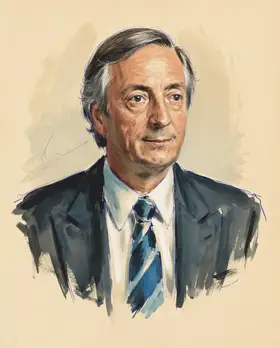
Néstor Kirchner on International Monetary Fund (IMF)
TL;DR
Néstor Kirchner viewed the International Monetary Fund as an impediment to national recovery, leading him to decisively break debt dependency.
Key Points
He temporarily defaulted on IMF debt in September 2003 to reject its conditions, forcing the Fund to roll over the loans.
His administration fully repaid the nearly $10 billion debt owed to the IMF in 2006, achieving financial independence from the institution.
The repayment was framed by the former president as burying an "ignominious past of eternal, infinite indebtedness" to external lenders.
Summary
Néstor Kirchner's core position on the International Monetary Fund (IMF) was one of strong opposition to its policy influence and conditionality, viewing the institution as having been instrumental in causing Argentina's economic collapse. He backed this stance with action by temporarily defaulting to the IMF in September 2003 rather than accepting its conditions, a move deemed unprecedented for a middle-income country. He later followed this by fully repaying Argentina's entire debt to the Fund in 2006, which successfully ended years of continuous negotiations and external pressure.
This move to eliminate IMF interference followed a period where the organization was seen as supporting policies that led to the 2001 crisis, such as an overvalued exchange rate through increasing indebtedness. By repaying the debt, the government aimed to bury what Kirchner called an "ignominious past of eternal, infinite indebtedness" and gain the autonomy necessary to implement domestic economic policies focused on social justice and national autonomy outside the neoliberal framework favored by Washington and international finance circles. This defiance contributed to the IMF's loss of influence in the region.
Frequently Asked Questions
Néstor Kirchner held a strongly negative stance toward the IMF, viewing its prior involvement as instrumental in Argentina's economic collapse, according to historical analysis. His administration actively worked to eliminate the institution's pressure and interference by refusing its demands and pursuing debt repayment, as detailed in reports covering his presidency. This led to a period of perceived national independence.
Yes, Néstor Kirchner challenged the IMF's authority in a highly visible confrontation, temporarily defaulting on obligations in 2003 to reject policy conditions. Following this, he took the decisive step of completely paying off the country's debt to the Fund in 2006. This action was widely seen as a major assertion of national sovereignty over international financial oversight.
The key action taken by Néstor Kirchner concerning IMF debt was its complete prepayment in 2006, settling the outstanding balance of approximately $9.81 billion. This move was explicitly intended to sever financial dependency on the institution's negotiations and conditional advice. This decision followed an initial standoff where he defied the IMF's terms.
Sources5
Néstor Kirchner: Argentina's independence hero
Argentina and the International Monetary Fund - Wikipedia
Argentina's Peronists split over IMF deal as top lawmaker rebels
Argentina's Struggle for Stability | Council on Foreign Relations
Role of the IMF in impoverishing countries – the case of Argentina
* This is not an exhaustive list of sources.