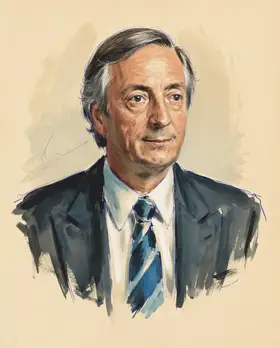
Néstor Kirchner on Free Trade Area of the Americas (ALCA)
TL;DR
Néstor Kirchner vehemently rejected the Free Trade Area of the Americas (ALCA) in favor of regional integration models like Mercosur.
Key Points
He actively opposed the Free Trade Area of the Americas (ALCA) during his presidency, notably at the 2005 Summit of the Americas in Mar del Plata.
The rejection of ALCA in 2005 was a key marker of his administration breaking with the North American strategy in favor of regional integration.
He was recognized as a crucial ally, alongside Hugo Chavez and Evo Morales, in the movement to defeat the ALCA proposal.
Summary
Néstor Kirchner's position on the Free Trade Area of the Americas (ALCA) was one of firm opposition. His administration's economic policy represented a decisive break from the North American strategy, explicitly rejecting the ALCA proposal in 2005. This stance was part of a broader neo-developmentalist model adopted by his government, which prioritized national autonomy and regional partnership over the terms dictated by the US-promoted trade bloc. The rejection of ALCA signaled Argentina's alignment with a new Latin American integration process alongside partners like Venezuela and Brazil.
This opposition was framed within a political shift where Argentina sought greater relative state autonomy by distancing itself from US-led initiatives. Kirchner's commitment to regional alternatives, such as pushing forward with the Great Southern Gas Pipeline project with Brazil and Venezuela, exemplified this strategy. This move positioned his government as a fierce defender of alternative integration frameworks in contrast to the neoliberal vision embodied by the ALCA. He was cited as one of the presidents, alongside Hugo Chavez and Evo Morales, whose efforts were instrumental in the defeat of the ALCA at the 2005 Summit of the Americas.
Frequently Asked Questions
Néstor Kirchner was a strong opponent of the Free Trade Area of the Americas (ALCA), according to analyses of his administration's foreign policy shifts. He explicitly rejected the US-promoted trade bloc in favor of promoting alternative regional integration projects, as documented in 2016 academic work. He saw this as essential for Argentina's growing relative state autonomy.
Yes, Néstor Kirchner was an active participant in the regional opposition to ALCA. He was present at the 2005 Summit of the Americas where the project's momentum was lost, alongside leaders like Hugo Chavez. Sources credit him, Chavez, and Morales with successfully campaigning against the proposal at that event.
Instead of ALCA, Néstor Kirchner favored building regional integration through mechanisms like Mercosur and championing South American infrastructure projects. For instance, he agreed with the presidents of Brazil and Venezuela in April 2006 to push ahead with the Great Southern Gas Pipeline. This reflected a move toward South-South cooperation.
Sources6
Venezuela, Brazil, Bolivia and Argentina Move Ahead on Integration
Accumulation and hegemony in Argentina in the age of kirchnerism
What is it like to be a President Néstor Kirchner Fellow? by Germán Linzer - OLA
Latin America Tour
History of Latin America–United States relations - Wikipedia
Chavez, the good and the evil - Pressenza
* This is not an exhaustive list of sources.