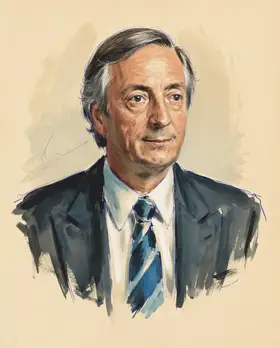
Néstor Kirchner on Debt
TL;DR
Néstor Kirchner favored aggressively paying down foreign debt to regain national sovereignty and economic autonomy.
Key Points
The administration made a definitive payment to the International Monetary Fund in January 2006, years ahead of schedule.
He favored a confrontational stance against creditors to achieve substantial debt reduction during negotiations.
His government pursued policies aimed at increasing national sovereignty by reducing external financial dependence.
Summary
Néstor Kirchner's core position on external debt was one of determined repudiation of previous payment strategies, advocating instead for aggressive principal reduction to escape perceived creditor dominance. His administration famously announced the full payment of Argentina's International Monetary Fund debt in early 2006, a move lauded domestically as a reclaiming of sovereignty and a decisive break from past economic policy failures. This action was presented as the necessary step to allow Argentina to determine its own economic destiny without external policy impositions, marking a high point in his administration's fiscal stance.
This confrontational approach stemmed from the recent painful experience of the 2001 default, and it informed his willingness to engage in hardline negotiations with private creditors during the subsequent restructuring process. He believed that sustained national development was contingent upon ending the cycle of dependence on international lenders and institutions. The debt payoff and his approach to restructuring signaled a shift toward prioritizing domestic policy needs over strict adherence to international financial orthodoxies, a hallmark of his political movement.
Key Quotes
"we bury an ignominious past of eternal, infinite indebtment."
"I would not tax poverty-ridden Argentines to pay off the debt and invited them to visit his country's slums to “experience poverty first hand.”
Frequently Asked Questions
Néstor Kirchner's main policy was to aggressively reduce and pay down Argentina's foreign debt to achieve greater economic sovereignty, according to reports on his tenure. He viewed heavy debt as an obstacle to self-determined national development, as detailed in analyses of his economic strategy. This led to landmark actions like the IMF repayment, which he framed as a victory for the nation.
Yes, Néstor Kirchner announced that Argentina would pay off its entire debt to the International Monetary Fund early in 2006, as widely reported at the time. This final payment was celebrated by his government as a significant achievement. The former president stated this action removed external pressure on Argentine policy decisions.
The former president advocated for a strong, non-conciliatory stance when dealing with international creditors during debt negotiations, as noted in economic commentary. He believed that Argentina needed to defy creditor demands to secure better restructuring terms. His approach was characterized as a hard line against private bondholders in order to maximize the sovereign benefit.
Néstor Kirchner viewed large external debt burdens negatively, seeing them as instruments that compromised Argentina's autonomy and subjected it to the demands of foreign financial entities. He aimed to use debt reduction as a tool for regaining national sovereignty. His actions demonstrated a commitment to minimizing the country's reliance on such financing mechanisms.
Sources9
Argentina Pays Off International Debt
Argentina pays off IMF debt
Defy the Creditors and Get Away With It
Argentine debt restructuring
Argentina’s Debt Trap
Can Kirchner Maintain His Hard Line on the Debt?
Argentina: Defy the Creditors and Get Away With It
Néstor Kirchner indebted Argentina at a higher rate with the Venezuelan dictatorship to pay the IMF
Has Argentina's President Maxed Out Her Credit Cards?
* This is not an exhaustive list of sources.