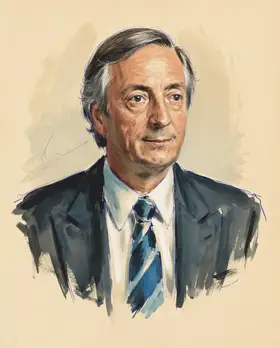
Néstor Kirchner
- Known for
- President of Argentina, Kirchnerism ideology
- Born in
- Río Gallegos, Argentina
- Education
- Lawyer, National University of La Plata
Néstor Kirchner defined Argentine politics through Kirchnerism, a progressive and nationalist adaptation of Peronism. His presidency (2003–2007) focused on rebuilding the industrial base and asserting national sovereignty after the 2001 crisis. He remains a deeply polarizing figure in Argentine history.
Signature Positions
Kirchner’s administration enacted key shifts in policy, often confronting established powers:
- Human Rights: Championed the annulment of the Dirty War amnesty laws, leading to the reopening of trials for past human rights abuses.
- Economic Policy: Negotiated a major debt swap and repaid the IMF, while increasing domestic demand through subsidies and wage increases.
- Foreign Policy: Discontinued automatic alignment with the United States, opposing the Free Trade Area of the Americas (ALCA) and favoring regional integration through Mercosur.
- Judiciary: Led a significant overhaul of the Supreme Court, removing controversial judges appointed under Carlos Menem.
Notable Tensions
Kirchner’s legacy is marked by several significant contradictions and criticisms:
- Dirty War Narrative: While demanding accountability for military abuses, critics argue he downplayed or overlooked the actions of guerrilla movements during the same period.
- Economic Management: Despite economic growth, critics point to the government's manipulation of statistics to underreport inflation and poverty figures.
- Political Style: He favored centralization of power, using emergency superpowers laws and micromanaging government tasks, often through loyal aides rather than traditional cabinet structures.
Kirchner's political strategy involved creating an anti-establishment image to build political renewal, a style continued by his wife, Cristina Fernández de Kirchner, whom he supported for reelection in 2007. His powerful political influence, even after leaving office, set a new precedent for governance in Argentina, sparking comparisons to Juan and Eva Perón.