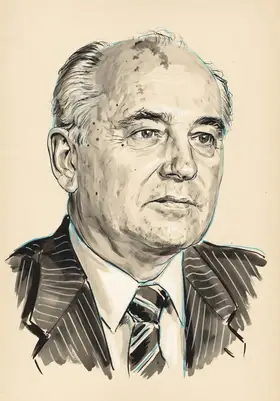
Mikhail Gorbachev on Russia and Ukraine War
TL;DR
Mikhail Gorbachev's stance is centered on the need for the West to treat Russia with respect and adhere to past commitments to avoid conflict.
Key Points
He denied that any binding promise was made in 1990 regarding NATO expansion, a point contradicted by current Russian leadership.
His comments suggest that future military actions could be avoided if the West treats Russia with respect for its interests.
His changes implemented in domestic politics and the economy led to the disintegration of the Soviet Union in the early 1990s.
Summary
Mikhail Gorbachev’s stated position regarding the conflict in Ukraine emphasizes that future military actions could be averted if the West demonstrates due respect for Russia and its interests. The former Soviet leader has repeatedly voiced a desire to see an end to the fighting, but frames the resolution around addressing what Russia perceives as unmet obligations by Western powers following the Cold War. This perspective is intertwined with historical grievances concerning the perceived missteps leading up to the current geopolitical climate, including the disintegration of the Soviet Union.
His perspective is noted in the context of current Russian leadership asserting that previous assurances regarding NATO's eastward expansion were broken, a claim he has previously addressed. The implication of his position suggests that a path to de-escalation requires a renewed framework of mutual accommodation and acknowledgment of Russia's security concerns, rather than solely focusing on the present military aggression. His historical role in the Soviet collapse is a point of reference when discussing the diplomatic failures leading to the present hostilities.
Key Quotes
Mikhail Gorbachev also underlined the Soviet Union's European identity by highlighting the concept of a "Common European Home" in 1989 before the Parliamentary Assembly of the Council of Europe.
Frequently Asked Questions
Mikhail Gorbachev's position is centered on the belief that the conflict could have been avoided, emphasizing the necessity for the West to treat Russia with respect for its interests. He has linked the current situation to historical grievances, particularly surrounding the perceived failure to honor past geopolitical commitments post-Cold War.
The available information suggests his commentary relates to historical context and what he believes should have happened to prevent the war, rather than a shifting opinion on the ongoing military actions themselves. He has addressed claims about prior agreements concerning NATO expansion, a key grievance cited by the current Russian leadership.
Mikhail Gorbachev's comments link the present situation to a history of broken commitments by the West, specifically concerning the expansion of NATO following the Soviet Union's collapse. He advocates for the West to show respect for Russia's interests as a prerequisite for avoiding further conflict.
Sources5
No End to Ukraine War in Sight | Tufts Now
No more wars if West treats Russia with respect: Putin - myRepublica
The Effects of Russia and Ukraine War on Food Security in Africa: The Nigerian Experience
Effects of NATO's Expansion on the Russia-Ukraine War
The Geopolitical Trajectories of the Russia-Europe Relations: Is Russia still an "Enigma"?
* This is not an exhaustive list of sources.