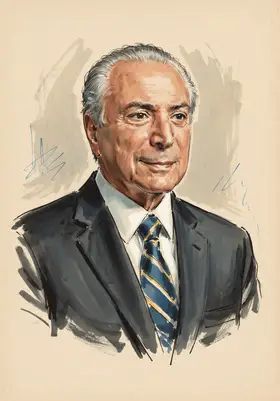
Michel Temer on Lula da Silva
TL;DR
Michel Temer historically opposed Lula da Silva's policies, viewing him as a political obstacle to economic orthodoxy.
Key Points
Temer, while Vice President, reportedly signaled to the U.S. Embassy his desire to see Lula da Silva move away from his first term's macroeconomic policies.
His administration reversed social programs, like the 'popular pharmacies' created under Lula, in favor of austerity measures.
The period of Temer's presidency saw an increase in repression against trade unions and social movements, historically aligned with Lula.
Summary
Michel Temer, as Vice President and later President, maintained a position of opposition to the policies associated with Luiz Inácio Lula da Silva. Evidence suggests that as early as 2006, while Vice President, Temer provided information to the U.S. Embassy, stating that Lula da Silva might need to be led away from the orthodox macroeconomic policies that characterized his first term, indicating a fundamental disagreement with the Workers' Party's economic direction. This perspective crystallized further when Temer's administration took power after the impeachment of Dilma Rousseff, which was seen by some as reversing social programs initiated under the prior administrations.
During his presidency, Temer pursued fiscal austerity and structural reforms, which stood in stark contrast to the spending policies of the Lula era, such as the abolition of 'popular pharmacies' created in 2004. Furthermore, his government faced organized resistance from social movements and trade unions, forces historically allied with the former president. While Temer's administration was a direct political successor to the government Lula helped build, his tenure was characterized by a reversal of that government's economic trajectory and an increased persecution of former political allies.
Frequently Asked Questions
Michel Temer has historically held a negative view of Luiz Inácio Lula da Silva's political and economic direction. As Vice President, he indicated a desire to see Lula's administration shift away from its macroeconomic policies. His own presidency was then defined by reversing many of the social and fiscal policies associated with Lula's time in office.
The provided context does not strongly indicate an evolution in Michel Temer's core stance against Lula da Silva's political project. His actions as President were antithetical to the prior PT government's agenda. He appears to have maintained a position of political rivalry based on differing economic philosophies.
While sources confirm Temer's opposition to Lula's policies when he was in power, there is insufficient data to detail his specific reaction to Lula's later electoral victory. The historical focus is on the rivalry that existed when Temer was President and Lula's allies were in office.
Sources4
Brazil After Dilma: Temer's Turn
Michel Temer - Wikipedia
Michel Temer's hardline policies are ruining Brazil | Letters | The Guardian
REACTION: A Third Term for Brazil's Lula - Americas Quarterly
* This is not an exhaustive list of sources.