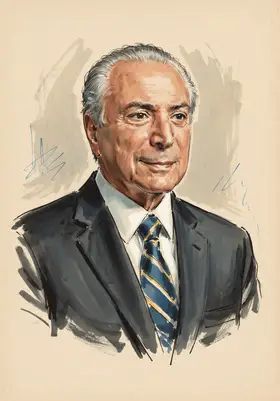
Michel Temer on Pardon
TL;DR
Michel Temer utilized presidential pardons, including one that benefited corruption convicts, sparking significant public and judicial backlash.
Key Points
In November 2016, he announced an institutional understanding to prevent any legislative attempts to pardon illegal campaign donations, responding to public outcry.
His December 2017 Christmas pardon decree broadened leniency rules to cover those convicted of corruption-related crimes.
He offered an amnesty in October 2017 for up to 60 percent of environmental crime fines in exchange for partial payment.
Summary
Michel Temer, as President of Brazil, significantly addressed the concept of pardon primarily through issuing traditional Christmas pardons, most notably in December 2017. This decree drew widespread criticism because it reportedly broadened the scope to include those convicted of corruption-related crimes and offered more lenient terms, such as pardoning first-time offenders after serving only one-fifth of their sentence. Critics argued that this move undermined ongoing anti-graft investigations, like the Car Wash probe, and acted as an unconstitutional overreach of executive power intended to secure political support.
Separately, Temer also issued a decree that offered an amnesty on environmental crime fines, erasing up to 60 percent of the debt for offenders who paid the remaining portion into a government fund. While proponents suggested this could raise funds for environmental recovery, opponents viewed this measure, like the wider pardon, as political horse-trading to secure votes from powerful congressional caucuses, particularly those representing rural interests, to shield the president from corruption charges. The Supreme Court subsequently suspended parts of the Christmas pardon, signaling a judicial check on the executive's use of this power.
Key Quotes
“We concluded we need to listen to the call from the streets, which means we are acting on a constitutional provision that says power is not ours; it's neither the President's, nor the Senate's, nor the Chamber of Deputies'. It's the people's. When people express the urgency, it must be taken seriously by the legislators and the government as well,”
“IBAMA will no longer be a body that monitors and punishes, but will become a body that acts effectively with resources and with planning, in [environmental] recuperation and sustainable development.”
Frequently Asked Questions
In late 2016, Michel Temer stated that an institutional deal had been reached with Congress to prevent any attempt to pardon individuals for illegal campaign donations. He emphasized the need to listen to the call from the streets regarding this matter.
Yes, his use of the pardon power faced significant legal challenges, specifically regarding the December 2017 Christmas pardons. Brazil's top prosecutor requested an injunction to stop parts of the decree, alleging unconstitutionality.
Michel Temer's actions show a mixed approach; while he secured an agreement to block pardons for illegal campaign funding in 2016, he later issued a controversial decree extending pardon terms to include corruption convicts in 2017. This suggests his stance was influenced by political necessity.
Sources5
Brazil’s Top Court Suspends Parts of President Temer’s Christmas Pardons
Temer announces deal to prevent pardon of illegal campaign donations
Temer Offers Amnesty, Erasing Up to $2.1 Billion in Environmental Crime Fines
Brazil top prosecutor challenges President Temer's Christmas pardons - MTV Lebanon
Why it would make sense to pardon Lula
* This is not an exhaustive list of sources.