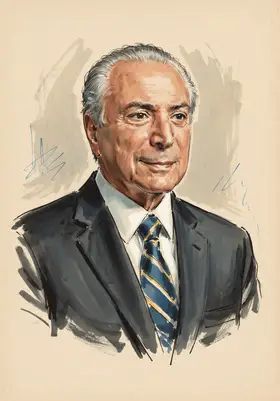
Michel Temer
- Known for
- 37th president of Brazil, Successor to Rousseff
- Born in
- Tietê, Brazil
- Education
- Doctorate in public law, Pontifical Catholic University of São Paulo
Michel Temer is the Brazilian politician who assumed the presidency in 2016 following the impeachment of Dilma Rousseff, governing until 2019. A lawyer and constitutional scholar by training, his time in office was defined by controversial austerity measures and numerous legal issues.
Signature Positions
Temer’s short tenure was marked by significant policy shifts aimed at fiscal control and reform:
- Spending Ceiling: Implemented a constitutional amendment to freeze public spending for two decades, adjusted only for inflation.
- Social Security: Pushed forward controversial Social Security and labor reforms amid widespread protests.
- Lula da Silva: Positioned himself as an opponent of Lula da Silva's policies, signaling a move away from left-leaning economic strategies.
- Dilma Rousseff Impeachment: Played a central role in the impeachment process, eventually succeeding Rousseff as president.
- Amazon Rainforest: Issued a decree to dissolve a protected reserve for mining, later revoked due to widespread criticism.
Notable Tensions
Temer's presidency was dominated by investigations and low public trust:
- Legal Issues: Faced multiple accusations of bribery, obstruction of justice, and illicit campaign funding related to Operation Car Wash, though he denied all wrongdoing.
- Popular Approval: His administration recorded exceptionally low public approval, with polls showing disapproval ratings reaching 82% by 2018.
- Dilma Rousseff Relationship: Became known for his perceived betrayal of Rousseff, highlighted by a leaked audio suggesting he anticipated her removal from office.
- Cabinet Appointments: Faced criticism for appointing an all-male, white cabinet upon taking office, the first such cabinet since 1979.
Temer is a veteran politician from the Brazilian Democratic Movement Party (PMDB), serving multiple terms in Congress and as Chamber President. His ascent to the presidency marked a sharp turn toward more market-friendly policies following the Rousseff era, leading to significant social unrest and economic uncertainty.