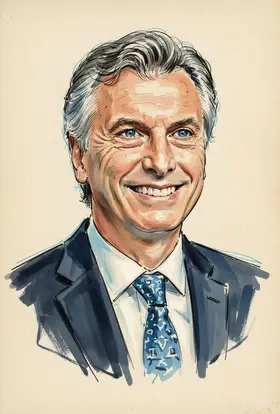
Mauricio Macri on Presidency
TL;DR
Mauricio Macri views the presidency as an opportunity to implement radical, market-oriented economic reforms to restore national prosperity.
Key Points
He moved Argentina from a fixed exchange-rate system to a floating one shortly after taking office in December 2015.
His administration resolved a fifteen-year sovereign default issue by settling with holdout creditors in February 2016.
Macri focused on strengthening anti-corruption efforts and improving ethical standards in public service during his four years in office.
Summary
Mauricio Macri's presidency, spanning from 2015 to 2019, was fundamentally centered on shifting Argentina away from the preceding left-wing, populist economic model. He entered office with a mandate to implement necessary, market-oriented reforms aimed at rebalancing the economy and reintegrating Argentina into the global market. Key evidence of this stance includes quickly abandoning currency restrictions, removing export tariffs, and settling the sovereign debt conflict to regain access to international credit markets, thereby lowering political risk for investment.
However, the implementation and results of these presidential actions were met with mixed reception and ultimately led to an economic crisis that cost him re-election. While the administration is credited with strengthening democratic institutions, improving ethical standards, and hosting the G20, its economic efforts were criticized for failing to contain inflation and for increasing external debt, leading to a steep recession. Following his term, he continues to reflect on the challenges of transforming a country trapped in cycles of instability.
Frequently Asked Questions
Mauricio Macri's main goal as president was to implement significant economic reforms to shift Argentina away from populist policies. He aimed to stabilize the economy, generate investment, and reconnect the country with global markets. He achieved some institutional and diplomatic goals but struggled with persistent economic instability.
The success of Mauricio Macri's presidency is viewed with mixed sentiment. His initial reforms, such as lifting currency controls and settling debt, were praised internationally for reducing political risk. However, the overall economic results, particularly regarding inflation and debt accumulation, are often cited as failures that prevented his re-election.
After his term, Mauricio Macri discussed the lessons and experiences of his presidency in public forums. He often focuses on the challenges of implementing deep transformation in Argentina, such as modernizing the country and promoting private sector investment. He continues to reflect on these experiences through his foundation work.
Sources9
Mauricio Macri: A Reformer In The Making
Mauricio Macri: From 'Kremlin wizard' to juggler at the traffic lights
Yes, Macri Failed on the Economy. But It Wasn't All for Naught.
Mauricio Macri - Wikipedia
Lessons from a Presidency
First 100 Days of Mauricio Macri's Presidency - LLYC
Argentina: Macri's Presidency: A Major Shift in Economic Direction
Mauricio Macri - Freedom.fiu.edu
Macri assumes control of PRO after deal with Bullrich | Buenos Aires Times
* This is not an exhaustive list of sources.