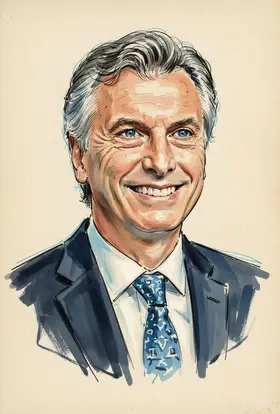
Mauricio Macri on Neoliberalism
TL;DR
Mauricio Macri's presidency represented a significant shift toward pro-market reforms and an austerity agenda, often characterized as a return to neoliberalism.
Key Points
His government pursued pro-market reforms following his 2015 election victory, ending the previous decade of increased state intervention.
The administration implemented cuts to public utility subsidies, such as those for electricity and water, which were described as being regressive.
Macri's approach favored gradualism in fiscal adjustment over 'shock therapy' initially, but relied heavily on international credit markets.
Summary
Mauricio Macri's victory in the 2015 Argentine presidential election initiated what many sources describe as a return to neoliberalism, marking a major policy shift from the preceding left-wing governments. His administration pursued sweeping domestic and foreign policy reforms, characterized by pro-market stances intended to attract international investment and lower the fiscal deficit, often by cutting public utility subsidies and attempting to reform the pension system. While his discourse was sometimes characterized as 'new Right,' the application of his policies, which included massive layoffs from government agencies and slashing export taxes, led critics to label his government a hotbed of neoliberalism and associated police violence.
Despite the characterization, some analysis suggests Macri did not fully adhere to strict neoliberal orthodoxy, avoiding the immediate privatization of nationalized firms like Aerolíneas Argentinas or YPF and opting for a gradualist approach to fiscal adjustment rather than a 'shock therapy.' However, reliance on international credit markets to finance the fiscal gap inherited from his predecessors eventually forced a request for a major IMF loan, leading to stricter austerity measures that caused poverty rates to return to earlier high levels. This combination of pro-market shifts with significant social resistance defined his administration's engagement with neoliberal policies.
Frequently Asked Questions
Mauricio Macri's presidency is widely characterized as a significant return to neoliberal policies in Argentina following a period dominated by center-left governments. He implemented sweeping pro-market reforms across domestic and foreign policy. While some analyses note he avoided extreme 'shock therapy,' his general direction was decidedly market-oriented.
Some critics argue that while Macri's administration was more pro-market, he stopped short of strict neoliberal orthodoxy, for instance, by not privatizing all state-owned firms nationalized earlier. However, the overall policy package of subsidy cuts, fiscal adjustments, and deregulation aligns with core neoliberal tenets.
Macri's neoliberal agenda faced immediate and substantial resistance from the Argentine people and political opposition. Critics frequently cited the resulting austerity measures and cuts to social programs as evidence of the plan's negative social costs.
Sources10
Argentina: Macri's Neoliberal Fantasies
The Problem with “Neoliberalism” - Public Seminar
Macri's Argentina Has Become a Hotbed of Neoliberalism and Police Violence | Truthout
The return of neoliberalism in ArgentinaOmnipotence
Macri's Wilderness: Neoliberal Enclosure, Provincial Democracy, and Legal Politics in Argentine Patagonia
Labor Politics and the Return of Neoliberalism in Argentina
Argentina Turns Right, Again: In Mauricio Macri's Argentina, the contradictions between “new Right” discourse and “old Right” actions come into focus.
The return of neoliberalism in Argentina: Toward a critical theory from (and for) the global South
No title available from snippet
Argentina ahead of the 2017 mid-term elections | Think Tank | European Parliament
* This is not an exhaustive list of sources.