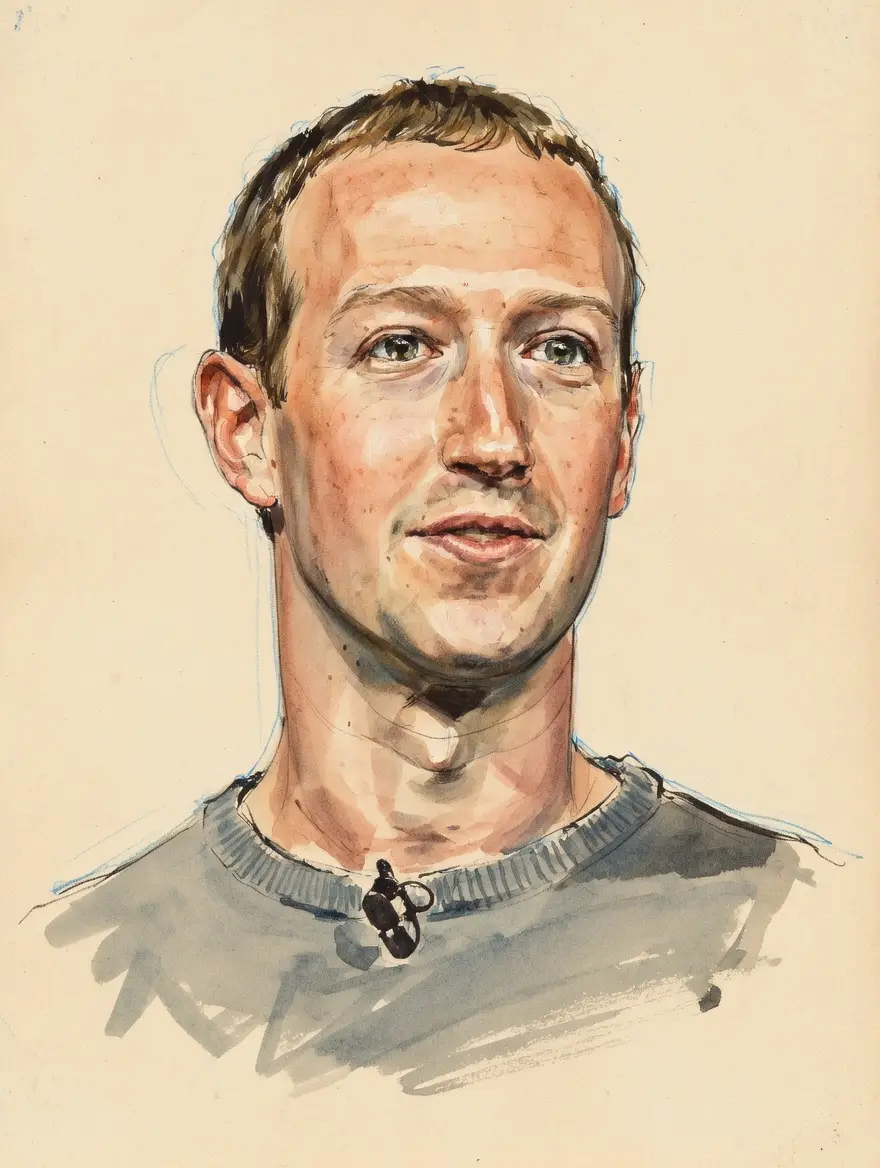
Mark Zuckerberg on Meta Platforms
TL;DR
Mark Zuckerberg fundamentally believes Meta Platforms must balance free expression with safety, often prioritizing user voice over stricter content controls.
Key Points
He stated in a 2026 deposition that criminal behavior on platforms serving billions is an inevitable, albeit small, percentage of user activity.
The CEO authorized end-to-end encryption for Facebook Messenger in 2023, prioritizing user privacy over warnings from child safety groups regarding potential risks.
In January 2025, Meta announced it was ending its third-party fact-checking program in the US, shifting toward a Community Notes model to allow more speech.
Summary
Mark Zuckerberg maintains a core position that Meta Platforms, as a massive global communication platform, must inherently accommodate a wide spectrum of expression, even accepting that criminal or harmful behavior is an unfortunate reality on a service reaching billions of users. He has argued that inhibiting speech, even with good intentions, risks reinforcing existing power structures rather than empowering individuals, a principle he connected to his 2019 Georgetown speech. His stance is evident in recent policy shifts, such as ending the third-party fact-checking program in the United States to implement a Community Notes model, aiming to decentralize content context and reduce what he perceives as over-censorship of legitimate political discourse.
This philosophy has evolved, particularly concerning content moderation and user safety, often in response to legal and public pressure. In legal depositions, he stated he resisted efforts to censor platforms or override senior executives on matters like restricting AI chatbot interactions with minors, emphasizing that user privacy via features like end-to-end encryption in Messenger was a more pressing concern. While defending the scale of his operations and investment in safety, he acknowledges that no system is perfect, having recently apologized to families harmed by online abuse while simultaneously advocating for a return to a commitment favoring broad free expression on the platform.
Frequently Asked Questions
Mark Zuckerberg views Meta Platforms as an essential medium for global free expression, a principle he strongly advocates for in his leadership. He believes inhibiting speech, even with good intentions, can ultimately reinforce existing power structures. His position centers on balancing this commitment to expression with necessary safety measures.
His stance has evolved, particularly regarding content moderation and political content. While remaining committed to free expression, he has recently pivoted to reduce perceived over-censorship by ending the third-party fact-checking program in the US. He also expressed regret over past pressure to censor COVID-19 content.
He acknowledged in a deposition that on platforms serving billions, some bad actors and criminal behavior are an unfortunate reality that the company must work hard, but realistically, can never perfectly stop. He cited user privacy through encryption as a pressing issue he acted upon, despite safety warnings.
Sources8
Mark Zuckerberg says criminal behaviour on Facebook inevitable
Mark Zuckerberg deposition: Facebook and Instagram are ‘addictive,’ New Mexico social media trial hears
Meta CEO Mark Zuckerberg said in a legal deposition that he resisted efforts to...
Meta CEO Mark Zuckerberg deposition: Resisted censoring platforms, he says
Zuckerberg deposition in New Mexico case over Meta
More Speech and Fewer Mistakes
Mark Zuckerberg - Wikipedia
Meta CEO Mark Zuckerberg in trial over social media safety
* This is not an exhaustive list of sources.