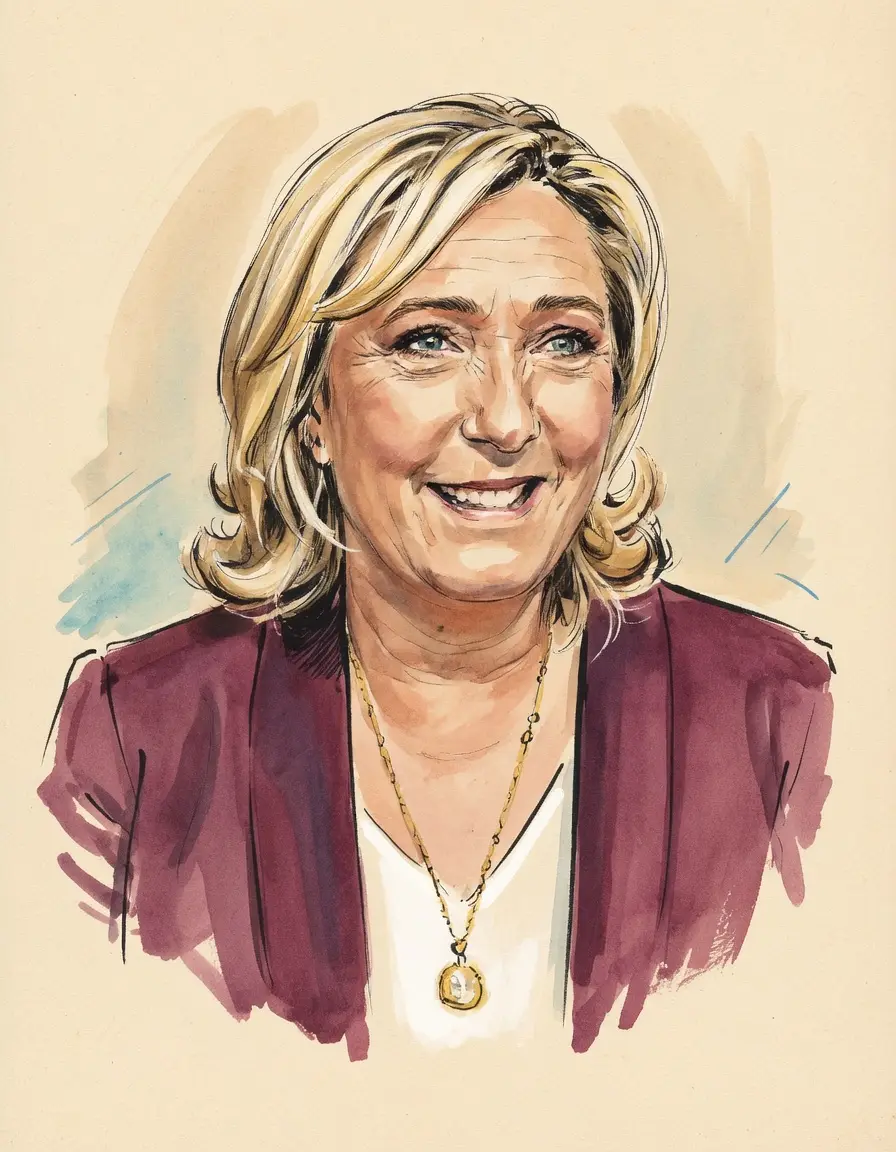
Marine Le Pen on China
TL;DR
Marine Le Pen views a close alliance between Russia and China as the single greatest danger facing France in the 21st century.
Key Points
Marine Le Pen views a Sino-Russian partnership as potentially the largest danger of the 21st century for France.
She pledged to diplomatically seek to avoid the Russia-China tie-up after the war in Ukraine concludes.
Voters for Le Pen in 2020 showed a slightly lower positive opinion of China (16%) compared to supporters of Emmanuel Macron (18%).
Summary
Marine Le Pen has expressed a strong, negative view regarding the strategic partnership between China and Russia, identifying it as a major global threat. She has pledged that, should she become president, France would work diplomatically to prevent this tie-up after any peace treaty ending the war in Ukraine is signed. This perspective aligns with a broader strategy among some on the French far-right to repair relations with Moscow specifically to facilitate Western encirclement and containment strategies directed at Beijing. Despite this clear stance on the Sino-Russian axis, general French public opinion across the political spectrum, including supporters of Le Pen, has shown a decisively negative feeling towards China overall, often citing political distrust and human rights concerns.
Her focus on preventing a unified Sino-Russian bloc suggests a pragmatic, security-oriented dimension to her foreign policy where she prioritizes dividing geopolitical rivals. While her party's stance on Russia appears more accommodating compared to centrist colleagues, this does not translate to openness toward China. Furthermore, while French public sentiment towards China is generally negative regardless of political affiliation, her party's voters' positive view of China is marginally lower than that of the incumbent president's voters.
Frequently Asked Questions
Marine Le Pen's current position is characterized by a strong opposition to a deepening strategic alliance between Russia and China, viewing it as a major global threat. She has indicated a foreign policy goal to actively work against this partnership once the Ukraine conflict ends. Outside of this specific Sino-Russian axis concern, general French public sentiment, which includes her voters, is largely negative towards China.
While her stance on Russia has evolved, appearing more accommodating recently, her expressed concern over a Russia-China alliance is presented as a commitment to preventing a future strategic grouping. Her party's general attitude, like the broader French public's, remains skeptical of Beijing, suggesting continuity in a negative underlying sentiment towards the country's rise.
Marine Le Pen stated that she believes an alliance between Russia, the world's largest raw material producer, and China, the world's largest factory, risks constituting the world's largest military power. She declared this potential partnership to be a "great danger" that France must diplomatically try to avoid after any peace treaty in Ukraine.
Sources4
Pro-Putin Marine Le Pen Looks to Block Dangerous Russia, China Alliance
Where do Sino-French Relations Stand in the Aftermath of the French Elections?
French public opinion on China in the age of COVID-19: Political distrust trumps economic opportunities
Parsing Asia Policy for France’s Radical Parties
* This is not an exhaustive list of sources.