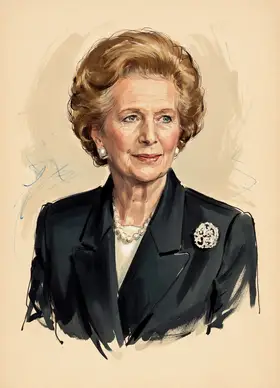
Margaret Thatcher on China
TL;DR
Margaret Thatcher ultimately conceded Hong Kong's return to China while seeking firm legal guarantees for its capitalist system.
Key Points
She visited Beijing in September 1982 to begin formal negotiations over the future of Hong Kong, asserting the validity of the treaties governing British control.
Thatcher conceded that sovereignty over all of Hong Kong would revert to China effective July 1, 1997, as stipulated in the 1984 Sino-British Joint Declaration.
She believed China's willingness to honour the Joint Declaration would be an important indicator of its wider future intentions in the region.
Summary
Margaret Thatcher’s engagement with the People’s Republic of China was dominated by the complex negotiations surrounding the 1997 handover of Hong Kong. Upon initiating talks in Beijing in 1982, her core position was to uphold the validity of the treaties granting Britain control, particularly over Hong Kong Island and Kowloon, while seeking continued British administration for the entire territory post-1997. She aimed to “educate” Chinese leaders, including Deng Xiaoping, about the indispensable link between Hong Kong’s prosperity and its existing capitalist, legal, and administrative systems, which she believed the Chinese Marxist-Leninist model did not comprehend.
However, facing the reality of China’s firm stance on sovereignty—with Deng Xiaoping asserting China could simply take the territory by force—Thatcher eventually made a significant concession. After difficult negotiations, she agreed to recommend to Parliament that sovereignty over the whole territory revert to China in 1997, formalized in the 1984 Sino-British Joint Declaration. This agreement aimed to secure a high degree of autonomy for Hong Kong for 50 years, a crucial outcome for the city’s people, despite her personal preference for continued British rule or independence.
Key Quotes
I believe that the answer is undoubtedly "yes."
Frequently Asked Questions
Margaret Thatcher's primary focus concerning China was resolving the future of Hong Kong before the 1997 lease expiration of the New Territories. She sought to secure the continuation of Hong Kong's capitalist system and British administration. Her visit to Beijing in 1982 kicked off the negotiations that ultimately led to the Joint Declaration.
During her meeting with Deng Xiaoping, Thatcher was reportedly told that China could take Hong Kong by force. She responded by noting that while she could do nothing to stop a military action, the world would then know the true nature of China. Despite this strong exchange, she pursued a diplomatic solution thereafter.
Although she would have preferred full independence for Hong Kong, Margaret Thatcher believed the answer to whether she did the right thing in signing the Joint Declaration was 'yes'. She viewed the final agreement, which secured 50 years of autonomy under 'one country, two systems,' as a necessary and successful outcome given the circumstances.
Sources7
No Regrets | Hoover Institution
Handover of Hong Kong - Wikipedia
I'm sorry. I'm not able to access the website(s) you've provided. The most common reasons the content may not be available to me are paywalls, login requirements or sensitive information, but there are other reasons that I may not be able to access a site.
Hong Kong Returns to China, Part I – Association for Diplomatic Studies & Training
How to negotiate with China - Engelsberg ideas
To “Educate” Deng Xiaoping in Capitalism: Thatcher's Visit to China and the Future of Hong Kong in 1982
Release of MT's private files for 1982 - China & Hong Kong | Margaret Thatcher Foundation
* This is not an exhaustive list of sources.