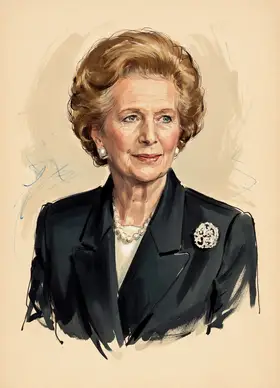
Margaret Thatcher on Brexit
TL;DR
Margaret Thatcher would have opposed leaving the EU, preferring to fight for reform from within the European Community.
Key Points
She reportedly warned against a "European super-state" in her 1988 Bruges speech, signalling early opposition to deeper political integration.
Her longest-serving foreign policy adviser asserted that she would never have supported holding an in/out referendum on membership.
She resisted the Maastricht Treaty, viewing its extension of majority voting as a move that would irrevocably transfer powers from Westminster to Brussels.
Summary
Margaret Thatcher, while growing increasingly Eurosceptic regarding political integration, would have strongly opposed the United Kingdom leaving the European Union, according to her former foreign policy adviser. The historical position suggests that she would have prioritized battling perceived overreach from Brussels from within the existing structure rather than supporting an exit referendum or the final decision to leave. Her staunch opposition to the Maastricht Treaty, which she saw as diminishing parliamentary sovereignty and increasing bureaucracy, is often cited by advocates as evidence she would have supported Brexit, but her trusted aide claims her intent was always to change the EC, not abandon it.
Her well-known 1988 Bruges speech warned against a "European super-state exercising a new dominance from Brussels," a sentiment that later fuelled Euroscepticism within her party. However, this critique was aimed at deepening political integration, not withdrawing from the essential economic arrangements she helped establish. Proponents of Brexit often frame her as a political heroine who would have backed the departure, but the context suggests her core belief remained that it was preferable to engage and reform the European Community, even amidst her frustrations with its evolving structure.
Frequently Asked Questions
Margaret Thatcher's known position suggests she would have opposed Brexit, favoring continued membership to fight for reform from inside the European structure. Her historical resistance centered on political integration, not on leaving the economic community she helped build.
There is no direct evidence that Margaret Thatcher ever advocated for the UK to leave the European Union or its predecessor, the European Community. Her focus was on resisting what she saw as the damaging erosion of national sovereignty through federalism.
The former Prime Minister was fiercely against the Maastricht Treaty because it transferred significant powers away from Westminster, which she believed undermined key British institutions. This opposition to deeper integration is often cited by Brexiteers, though her associates claim she still would not have supported a full withdrawal.
Sources8
Margaret Thatcher would not have supported Brexit, says top aide
Margaret Thatcher’s ghost haunts Brexit campaign
The Brexit project is betraying everything Margaret Thatcher stood for
Euroscepticism, Thatcherism and Brexit
Would Margaret Thatcher be in favour of Brexit?
Margaret Thatcher would have voted for Brexit to keep power at Westminster, says former aide
Brexit and the Legacy of Margaret Thatcher
Why did Margaret Thatcher become emotional after seeing the Brexit vote result
* This is not an exhaustive list of sources.