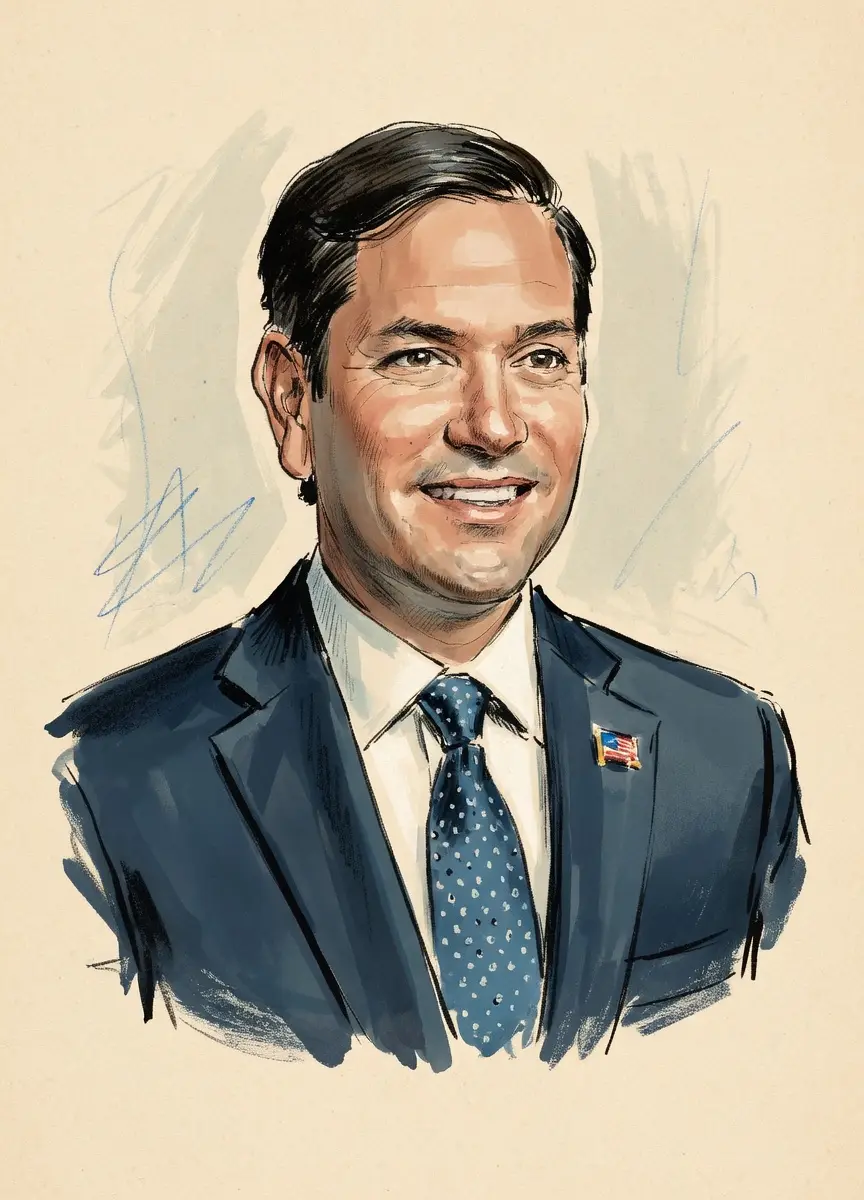
Marco Rubio on Venezuela
TL;DR
Marco Rubio defends the post-Maduro ouster strategy which prioritizes economic stabilization and oil leverage over immediate democratic transition.
Key Points
He defended the January 2026 military operation that captured Nicolás Maduro to Caribbean leaders, stating Venezuela is better off afterward.
The current policy utilizes a short-term mechanism allowing the movement of sanctioned oil in return for proceeds being deposited into a U.S.-oversight account for the Venezuelan people's benefit.
The Secretary has stated the opposition is no longer present, contrasting with his past support for opposition figures like María Corina Machado.
Summary
Marco Rubio, as Secretary of State, became the architect of the United States' policy in Venezuela following the military operation that captured former President Nicolás Maduro in January 2026. His core position shifted from his previous role as a strong congressional advocate for Venezuelan democracy to a transactional approach focused on immediate stability and securing oil sector access for the U.S. He argued that the ouster addressed a significant strategic risk posed by the prior regime, which served as a base for US adversaries like Iran and Russia. His current policy aims for an end state of a friendly, stable, and democratic Venezuela, but acknowledges this will take time, utilizing short-term mechanisms to fund the nation’s immediate needs through oversight of sanctioned oil sales.
This strategy involves complex dealings with the interim authorities, including allowing the movement of quarantined oil in exchange for funds being deposited into an account the U.S. will oversee for the benefit of the Venezuelan people, such as purchasing medicine from the U.S. Critics argue this approach prioritizes corporate oil interests over a genuine democratic transition, effectively sidelining the opposition figures he once championed, like María Corina Machado. However, Rubio defends this pivot as a realistic assessment of the ground situation, noting positive early steps such as the release of political prisoners and the passing of a new hydrocarbon law favoring private investment. [cite:3,cite:2]
Frequently Asked Questions
Marco Rubio's current position, as Secretary of State, is centered on achieving stability and recovery in Venezuela following Maduro's removal. He advocates for a phased approach that uses controlled oil revenue to fund the country's immediate needs while working toward eventual free and fair elections. He views this transactional strategy as necessary realism after the prior regime's removal.
Yes, his public stance has markedly changed from his time in the Senate, where he was a strong proponent of democratic restoration. Critics note his current role as architect of a strategy that prioritizes oil access and cooperation with regime insiders over an immediate democratic transition. He now dismisses the opposition's current relevance, a significant reversal from past actions.
Marco Rubio stated that the U.S. policy post-Maduro's capture has three objectives: stability, recovery, and transition to a democratic state. He emphasized that stability was achieved by avoiding civil war and creating a mechanism to fund essential services through oil proceeds under U.S. oversight. He views the progress made in the first few weeks as better than expected given the complexities.
Sources4
Rubio defends U.S. ouster of Venezuela's Maduro to Caribbean leaders
Secretary of State Marco Rubio Before the Senate Committee on Foreign Relations on U.S. Policy Towards Venezuela
Marco Rubio's Deal: Trading Venezuelan Democracy for Oil
* This is not an exhaustive list of sources.