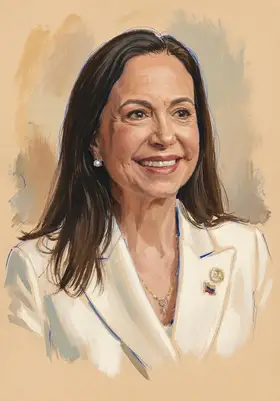
María Corina Machado on Oil Policy
TL;DR
María Corina Machado advocates for fundamental reforms to Venezuela's oil sector to promote transparency and attract necessary foreign investment.
Key Points
An advisor to María Corina Machado stated a need to balance auditing secret contracts with utilizing currently producing barrels for economic needs.
Her return to Venezuela poses a potential short-term threat to the stabilization plan favoring massive investments from multinational oil companies.
She won the opposition primary election despite ongoing political barriers set up by the former ruling party.
Summary
María Corina Machado's position on oil policy centers on the urgent need to overhaul the management of Petróleos de Venezuela (PDVSA) to halt the national economic collapse that has decimated the sector. Key to her economic vision is moving away from the previous administration's opaque, state-controlled model toward one that attracts substantial foreign investment required for infrastructure revitalization and production recovery. This stance is supported by her advisors who emphasize the necessity of incorporating international partners while simultaneously auditing and dealing with existing, complex, and often secret contracts established under the former regime.
This approach positions her against the former government's framework, which critics argue prioritized cronyism over technical operation, leading to depleted reserves and dilapidated infrastructure. Her vision implies a significant restructuring of PDVSA's relationship with the state and international entities, aiming for a transparent system that uses oil revenue for national benefit, while acknowledging the immediate need for those barrels of crude to support economic stabilization. This focus on recovery through market-oriented reform contrasts sharply with the state-led stagnation prior to the recent political transition.
Frequently Asked Questions
María Corina Machado's main goal is to fundamentally reform the state oil company, PDVSA, to ensure transparency and attract the necessary foreign capital. She believes this overhaul is critical to reviving the country's production capacity after years of decline under the previous regime.
The U.S. stabilization plan, focused on large multinational investments, may see her return as a near-term threat to its execution. Her opposition role exists within a political context where US cooperation with interim authorities over oil is currently prioritized for stability.
The available information emphasizes her commitment to fundamental structural change in the oil sector, which aligns with previous calls for economic reform. Her position appears consistent with a move toward market-based recovery, contrasting with the previous administration's nationalization policies.
Sources10
Venezuela and US Probe Secret Oil Deals
Machado Wins Opposition Primary in Venezuela, but Questions Remain on Election
Maduro's Secret Oilfield Contracts Draw Scrutiny of US Officials
Venezuela Oil Petrostate Erwin Arrieta History
Venezuela: Maduro's Party Sets Barriers to Machado's Return
US seizes more tankers, courts oil companies as post-Maduro Venezuela takes shape
US seizes Venezuelan-linked tanker before Trump-Machado Meeting
Post-Maduro Venezuela and U.S. Regional Strategy
Venezuela's economy under Maduro – and what happens now he has gone
Trump Threatens Countries Selling Cuba Oil
* This is not an exhaustive list of sources.