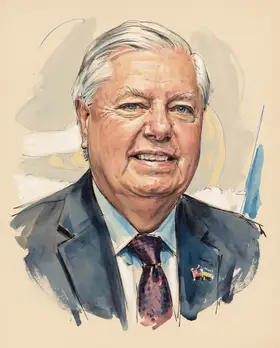
Lindsey Graham on Ukraine
TL;DR
Lindsey Graham strongly advocates for significant economic sanctions on Russia and its energy customers to force a resolution to the conflict in Ukraine.
Key Points
He stated that President Trump greenlit the bipartisan Russia sanctions bill he worked on with Senator Blumenthal in January 2026.
The proposed legislation aims to allow the President to impose sanctions and secondary tariffs on countries buying Russian oil to finance Putin's war.
Graham views a U.S.-Ukraine deal over critical minerals as monumental, creating an economic interest for the U.S. to defend Ukrainian stability.
Summary
Lindsey Graham has been a vocal proponent of strong measures against Russia to end the war in Ukraine, emphasizing economic pressure as a critical tool for diplomacy. He has actively worked to create bipartisan legislation, such as the Sanctioning Russia Act, aimed at giving the president authority to impose secondary tariffs on countries, notably China and India, that purchase Russian oil and energy cheaply. His core argument is that weakening Russia's war financing, derived primarily from the energy sector, is essential to force Moscow to negotiate seriously and prevent further aggression beyond Ukraine's borders.
He has also linked Ukraine's security and economic future to American interests, particularly through proposed deals involving Ukraine's vast critical mineral deposits. This strategy is intended to create a tangible economic stake for the U.S. in Ukrainian stability, thereby bolstering long-term security guarantees beyond immediate military aid. Graham consistently frames inaction or appeasement as a dangerous precedent that emboldens adversaries, maintaining that a firm stance is necessary to stop Putin and preserve international order.
Frequently Asked Questions
Lindsey Graham is a strong advocate for supporting Ukraine against Russian aggression, primarily by pushing for severe economic consequences for Russia. He believes that weakening Russia's war machine through sanctions on its energy sector is the most effective path to a favorable end to the conflict. He has consistently urged presidents to take a firm stance.
Graham's core position of opposing Russian aggression and supporting measures to stop it appears consistent, though his focus has evolved with the administration in power. He has actively worked across party lines to pass sanctions legislation designed to increase leverage on Moscow. His current strategy heavily emphasizes economic pressure alongside military aid.
Lindsey Graham has argued that Russia will only stop the war when the military costs increase and the economic costs, particularly from lost energy revenue, become too high. He champions legislation to allow tariffs on nations buying cheap Russian oil to finance the war, believing this breaks Putin's ability to wage conflict. He stresses that no diplomatic plan works without this credible economic pain.
Sources3
Graham Statement on Russia Sanctions Bill - Press Releases - United States Senator Lindsey Graham
Energy Leverage in the Russia-Ukraine War: Dialogue with Senator Lindsey Graham and Senator Richard Blumenthal
Lindsey Graham just won't give up the Ukraine-NATO ghost | Responsible Statecraft
* This is not an exhaustive list of sources.