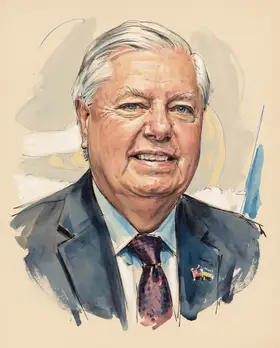
Lindsey Graham on Iran
TL;DR
Lindsey Graham strongly advocates for the removal of the Iranian regime, believing it will bring peace and prosperity to the Middle East.
Key Points
He argued in February 2026 that the Iranian regime was at its weakest point since 1979, presenting a "Berlin Wall Moment."
He publicly called on Gulf Cooperation Council countries, specifically mentioning Saudi Arabia, to join the US and Israel in strikes against Iran.
He stated that the downfall of the current regime would make normalization between Saudi Arabia and Israel possible again.
Summary
Lindsey Graham, a long-time proponent of intervening in the Middle East, has expressed a clear and vocal position advocating for regime change in Iran. He asserted that when the current regime falls, a new Middle East will emerge, leading to unprecedented prosperity, and stated that spending money to “take this regime down” is worthwhile. This stance is framed as creating a historic opportunity for peace, similar to the end of the Soviet Union, and would allow the Iranian people to determine their own future, rather than remaining under an oppressive state sponsor of terrorism.
His position includes criticizing allies who he feels are not fully committing to the effort against Tehran, suggesting Saudi Arabia should be more involved militarily against Iranian aggression that threatens the region and American interests. He views the current situation as the regime’s weakest point since 1979, spurred by Israeli and US military action, and he supports the Iranian people who are protesting. He has also cautioned against certain strikes that might cripple Iran's future oil economy, which he sees as essential for a post-regime society.
Frequently Asked Questions
Lindsey Graham maintains a strongly negative stance toward the current Iranian regime, viewing it as a state sponsor of terrorism that threatens the region. He has been a longtime advocate for military intervention aimed at achieving regime change in Tehran. He believes the removal of the current leadership is essential for regional peace and prosperity.
The provided context suggests his position has been consistently hawkish, favoring military pressure for decades, but his current statements focus on the active conflict scenario. He appears to be a constant proponent of strong action, even offering 'coaching' to allies on lobbying for such action prior to recent strikes. His historical pattern indicates a strong preference for robust US military involvement in the region.
If the current leadership collapses, Lindsey Graham anticipates a major positive shift, including a "new Middle East" and unparalleled prosperity. He believes the removal of the regime will lead to the atrophy of terrorist proxies and allow the Iranian people to chart their own destiny toward freedom.
Sources8
'We're going to make a tonne of money': US Senator Graham on US war on Iran
Politico Article on Lindsey Graham Interview Iran
Lindsey Graham on Iran Strikes
Lindsey Graham, Trump, Iran
ICYMI: Senator Lindsey Graham: Iran is Facing a Berlin Wall Moment — History is Watching Us Now
'Our allies have chosen the sidelines': US Senator Lindsey Graham increasingly vocal on Iran war
* This is not an exhaustive list of sources.