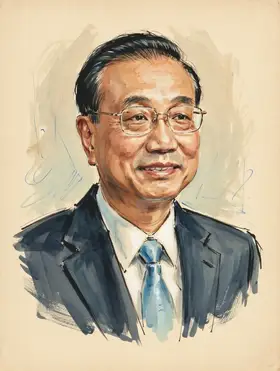
Li Keqiang on Economy
TL;DR
Li Keqiang championed using multiple real indicators to gauge China's true economic health over official statistics.
Key Points
He framed China's economy as entering a 'new normal' shifting from high-speed to medium-to-high speed growth as of January 2015.
His government set the 2016 GDP growth target between 6.5 percent and 7 percent, the first time the target was presented as a range instead of a single number.
In his final government report, he focused on the need for jobs, setting a higher employment creation target of 12 million for 2023.
Summary
Li Keqiang's economic stance was defined by a preference for real, tangible economic activity metrics over official Gross Domestic Product figures. This perspective was notably captured by the creation of the "Li Keqiang Index," an alternative measure comprising railway cargo volume, electricity consumption, and bank loans disbursed. He reportedly used these indicators as a better gauge of local economic reality when serving as a provincial official, suggesting a focus on ground-level performance over headline numbers. This preference implies a pragmatic approach to understanding economic challenges, prioritizing data that reflects industrial and credit health.
His government work reports often reflected this concern for structural shifts and challenges, such as setting GDP growth targets in a range rather than a single figure, which was perceived as realistic and less prone to over-expectation. Furthermore, he highlighted employment creation as a critical objective, especially in his final report, signaling that social stability through jobs was a primary economic goal alongside sustainable, rather than merely high-speed, growth.
Key Quotes
At present, China's economy has entered a state of new normal – the gear of growth is shifting from high speed to medium to high speed.
China's Premier Li Keqiang said on Friday it was not an easy thing to achieve a gross domestic product (GDP) growth goal of around 5.5% in 2022 for an economy as big as China's.
Frequently Asked Questions
Li Keqiang's economic position strongly favored using real activity indicators, like the Li Keqiang Index components, to assess the nation's true economic pulse. He advocated for sustainable, medium-to-high speed growth over excessively high rates.
He stated that China’s economy was entering a 'new normal' characterized by a shift toward medium-to-high speed growth, acknowledging structural difficulties. He also emphasized that maintaining employment stability was a core economic priority.
Li Keqiang reportedly preferred an index based on three indicators: outstanding bank loans, electricity consumption, and railway cargo volume. He considered these metrics more reliable than official GDP figures for tracking underlying economic performance.
Sources6
Li Keqiang index - Wikipedia
China's Li Keqiang Index
10 quotes on China's economy from Premier Li Keqiang
An assessment of Premier Li Keqiang's government work report
Li Keqiang's farewell points to employment as China's major problem
China Expects GDP To Grow Over US$869 Billion In 2026
* This is not an exhaustive list of sources.