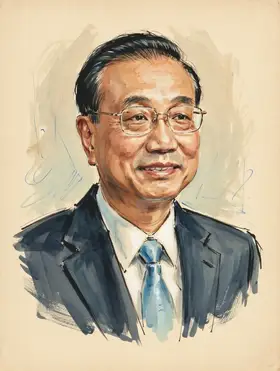
Li Keqiang on Economic Index (Economist)
TL;DR
Li Keqiang championed the composite index, favoring its holistic view over official GDP statistics.
Key Points
He reportedly first referred to the composite index, including electricity use, around 2010 while serving as Party Secretary of Liaoning Province.
The index was intended to provide a more transparent and holistic view of China's economic health than official GDP figures.
The components originally emphasized—electricity usage, rail cargo volume, and loan disbursement—are considered core indicators of real economic activity.
Summary
Li Keqiang, during his tenure as Premier, was strongly associated with and often cited the composite "Li Keqiang Index" as a more accurate gauge of China's true economic activity than the official Gross Domestic Product figures. This index, which he reputedly first referenced around 2010, typically aggregates electricity consumption, rail freight volume, and bank loan volumes to provide a more tangible measure of real economic throughput. He believed official GDP data could be subject to manipulation or might not fully capture underlying structural changes, thereby making the index a crucial, preferred metric for internal assessment and external communication of China's performance.
The focus on this alternative metric implied a degree of skepticism toward the reliability of strictly top-down economic reporting from provincial levels, suggesting a preference for bottom-up, activity-based indicators. While the original index gained international recognition, its utility and relevance have been debated, particularly following his departure from the premiership, with some commentators noting its decline in official prominence. Nevertheless, the concept remains tied to his economic philosophy, emphasizing real-world activity over potentially massaged headline figures.
Key Quotes
...the GDP figures in Liaoning were unreliable and that he himself used three other indicators: the railway cargo volume, electricity consumption and loans disbursed by banks.
...describing the official GDP as “man-made,”
Frequently Asked Questions
Li Keqiang strongly favored the composite economic index, often referred to as the Li Keqiang Index, over official GDP statistics. He viewed it as a more trustworthy indicator of China's actual economic momentum during his time in high office.
The index he promoted typically combines three primary, activity-based metrics: electricity consumption, rail freight volume, and the volume of bank loans issued. He believed these components reflected real-world economic throughput more accurately.
He expressed implicit skepticism toward the official GDP figures, preferring the composite index because he felt raw activity data was less susceptible to manipulation. This preference demonstrated his reliance on bottom-up indicators for economic assessment.
Sources9
How to measure China’s true economic growth
Li Keqiang index - Wikipedia
China’s Li Keqiang Index
China Li Keqiang Index - MacroMicro
Li Keqiang Index: Introduction and EDA
The Keqiang Index as an alternative to GDP
The Li Keqiang Index is dead. Long live the new Li Keqiang Index?
Li Keqiang: A Premier’s Measurement of China’s Economy
* This is not an exhaustive list of sources.